
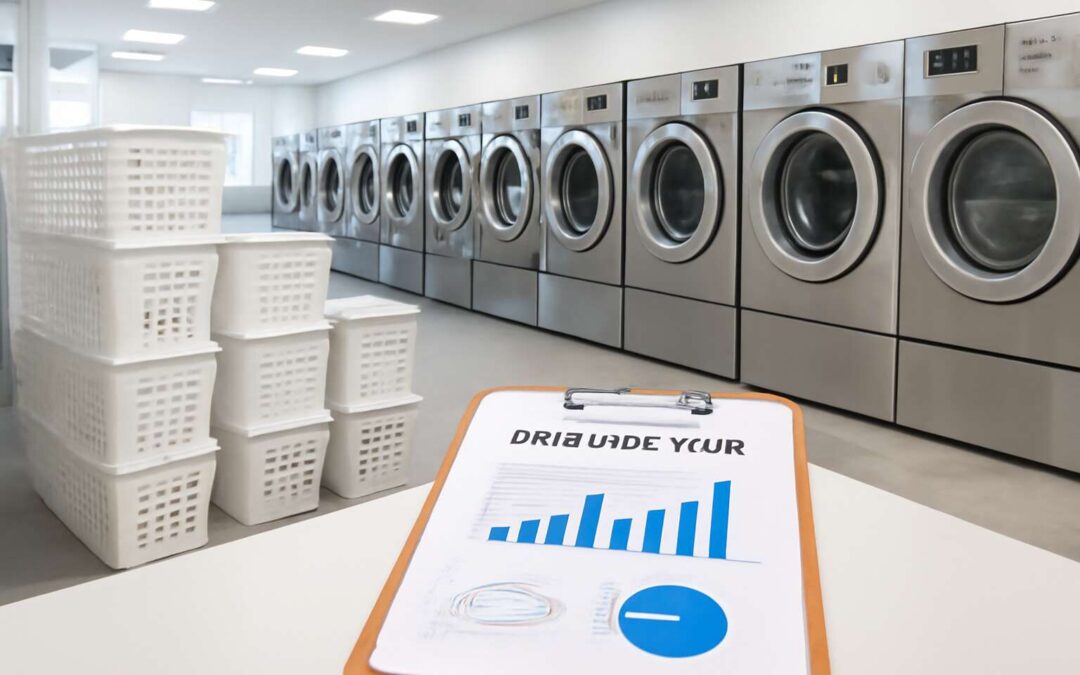
Understanding the laundry service market
Market overview and trends
In South Africa, the laundry service market is growing at roughly 5% annually, driven by busy urban households, growing hospitality, and a wave of small businesses seeking dependable turnaround times. Market dynamics span from local shops to franchise chains, with reliability often trumping price. A well-crafted business plan sample laundry service highlights optimal routes, equipment needs, and scalable staffing.
- Hospitality and tourism growth in Johannesburg, Cape Town, and Durban
- Corporate wear and uniforms driving steady cleaning needs
- Busy households preferring doorstep pickup and quick turnover
- Healthcare facilities seeking compliant, hygienic laundry
Trends blend sustainability with convenience: eco-friendly detergents, water-saving machines, and digital payments shaping expectations. On-demand scheduling and transparent pricing add clarity in a crowded market!
Target customer profiles
Time saved is revenue earned, and in urban South Africa, that truth hits home every Tuesday morning. Understanding who buys laundry help—when, where, and why—turns a basic service into a scalable plan worth investing in. The right profile helps a business plan sample laundry service speak in a language decision-makers actually hear.
Target profiles in SA span busy households, hospitality players, corporate wear managers, and healthcare facilities. Each segment values reliability, clear pricing, and convenient scheduling. Here’s a quick snapshot:
- Busy urban households needing doorstep pickup and quick turnover
- Hotels, guesthouses, and B&Bs with steady laundry demand
- Corporates managing uniforms and PPE across sites
- Healthcare clinics requiring hygienic, compliant processing
Crafting a service model around these personas helps define routes, staffing, and turnaround times—without flogging a dead washing machine.
Competitive landscape and benchmarking
South Africa’s bustling Tuesday mornings are a reminder that laundry is a competitive edge, not just a chore. In SA, 68% of hospitality managers say laundry turnaround time directly hits the bottom line. The fastest way to win is to understand where rivals shine and where they trip over themselves. The competitive landscape and benchmarking aren’t vanity metrics; they’re a GPS for pricing, scheduling, and service reliability.
To stay ahead, consider these benchmarks:
- Reliability of pickup and delivery windows
- Transparent pricing with clear tiers
- Turnaround times and wash quality metrics
With those benchmarks, a business plan sample laundry service helps lock in practical decisions—routes, staffing, equipment, and the pricing ladder—so you can scale without turning the wash cycle into a soap opera.
Regulatory and compliance considerations
Hospitality in South Africa runs on reliability, and a recent pulse check shows nearly 70% of managers link laundry delays to guest dissatisfaction and lower revenue. Regulatory and compliance considerations aren’t afterthoughts—they’re the spine of a credible business plan sample laundry service. From licensing and waste management to health-and-safety standards, every rule nudges pricing, operations, and risk management into sharper focus.
Key regulatory focal points include:
- Licensing and local by-laws governing service operations
- Chemical handling, water usage, and wastewater discharge compliance
- Health and safety, sanitation, and PPE requirements
- Data protection for customer information and payroll records
When compliance is embedded in a business plan sample laundry service, routes, staffing, and supplier agreements align with regulatory expectations, reducing downtime and reputational risk while enabling scalable growth.
Defining a compelling value proposition for a laundry service
Unique service offerings and differentiation
In a sea of stained socks and shouty promotions, 60% of customers switch brands for faster turnaround—your value proposition is your clean cape. It promises reliability, speed, and transparency—clear pricing, dependable pickup windows, and real local flair. For a business plan sample laundry service, this is the hook that says: we save you time and spare you the washing nightmares.
Beyond the basics, stand out with distinct offerings that resonate with South African customers:
- Same-day turnaround in metro areas and secure, contactless delivery
- Eco-conscious detergents and water-saving cycles
- Special care for delicates and uniforms with guaranteed stain removal
These elements carve a clear differentiation path without jargon.
Pricing strategy and revenue models
Across South Africa, 60% of customers switch brands for faster turnaround, a reminder that trust travels on schedule. Your value proposition is the clean cape—reliability, speed, and transparent pricing that makes the chaos of laundry feel solvable. Each pickup window kept, every bag returned on time—this is the promise you carry into busy homes and tight-knit workplaces.
Pricing strategy and revenue models must mirror that promise. In shaping a business plan sample laundry service, the pricing narrative maps value to predictable revenue, with clear per-kilogram rates, tiered packages for households and small businesses, and optional add-ons for delicates or uniforms.
- Transparent online pricing with clear rates
- Tiered packages for households, small businesses, and uniforms
- Subscription or membership options for predictable revenue
Think of revenue as care that compounds: a steady drumbeat of recurring orders and partnerships, without erasing the human pulse at the heart of every wash.
Brand positioning and messaging
In a South Africa market where 60% of customers switch brands for speed, trust must arrive on schedule. A brand that speaks simply and keeps its calendar is a beacon in the hectic home. This business plan sample laundry service shines a lantern in a city of restless laundry!
Brand positioning: we are the shadowed harbor for busy households and small offices—steady, punctual, and transparent.
- Reliability that you can set your watch to
- Speed that respects your clock
- Transparent updates and fair pricing
Messaging: the voice is respectful but intimate, a whisper that travels from pickup to delivery with honest updates, and a promise kept. The gothic cadence yields clarity, not mystique, ensuring readers feel seen and assured.
Customer experience design and retention strategies
Across South Africa’s bustling towns, punctuality is the new luxury. A recent study shows 68% of busy households prize on-time pickups above all else, turning reliability into a differentiator. Defining a compelling value proposition means promising relief, clarity, and care—before the first bag hits the curb!
Customer experience design becomes the map that keeps wallets and calendars aligned. To weave trust into every interaction, consider these elements:
- Real-time status updates that arrive with the courier
- Flexible pickup and delivery windows that bend without breaking commitments
- Transparent pricing with no hidden surcharges
Retention thrives where warmth meets accountability. Simple loyalty rituals, timely follow-ups, and easy feedback loops turn first-time customers into regulars. This approach mirrors a business plan sample laundry service, ensuring each customer feels seen, valued, and steadily served.
Operations, logistics, and technology for a laundry business plan
Facility requirements and equipment selection
As the old saying goes, “Time saved is money earned,” and in laundry operations every minute counts. In the business plan sample laundry service, operations, logistics, and technology lock arms to move orders quickly and reliably. A compact, flexible layout supports sorting, washing, drying, and finishing with precision.
Facility requirements and equipment selection matter. A well-lit, moisture-controlled space with proper drainage, electrical capacity, and energy recovery minimizes bottlenecks. The focus is on high-capacity, energy-efficient machines, finishing gear, and robust chemical dosing—designed for a South African market and steady throughput.
- Industrial washing machines (high-capacity, energy-efficient)
- Industrial tumble dryers
- Flatwork ironers and finishing stations
- Sorting, folding, and packing areas
- Water treatment and chemical dosing systems
This approach also weaves logistics and technology: route optimization, pickup/delivery windows, and barcode-based tickets keep every garment moving. In SA contexts, resilient power and water management reinforce reliability.
Workflow optimization and quality control
Speed is the unseen currency of laundry service. In South Africa, time-poor businesses rely on partners who deliver predictability. A 10-minute delay can shave up to 8% of weekly throughput, so with every minute saved, throughput climbs and client trust solidifies, as operations, logistics, and technology move in lockstep to finish the job. I’ve seen this translate into real client loyalty.
A business plan sample laundry service would frame the backbone this way: a lean workflow, route optimization, fixed pickup and delivery windows, and barcode-based tickets that reveal status at a glance.
- Route optimization
- Barcode-based tickets
- Real-time status tracking
- Pickup/delivery windows
Technology links water treatment, dosing, and energy recovery into daily flow. In SA contexts, resilient power and water management underpin reliability, while finishing and packing maintain quality. The outcome? Consistency that clients feel in every garment.
Inventory management and supplier relationships
Every minute matters in SA’s laundry lanes: a 10-minute delay can shave up to 8% of weekly throughput. Operations, logistics, and technology must move in lockstep, and inventory management with solid supplier relationships is the quiet engine behind reliability. A business plan sample laundry service frames this backbone through lean workflow, fixed pickup windows, and barcode-based tickets that reveal status at a glance. I watch the gauges rise when the line hums true.
Key inventory and supplier components include:
- Real-time stock visibility and demand forecasting
- Supplier lead times, contract terms, and quality metrics
- Barcode-based tracking and automatic reordering
Technology links water treatment, dosing, and energy recovery into daily flow. In SA contexts, resilient power and water management underpin reliability, while finishing and packing maintain quality. The result is a consistency that clients feel in every garment.
Staffing, training, and labor planning
Operations in our laundry ecosystem move with the precision of a metronome, and in SA that rhythm must endure. Resilient power and water management underwrite reliability, while treatment and energy recovery keep lines humming. This is the backbone of a business plan sample laundry service: lean workflow, fixed pickup windows, and barcode-based tickets that reveal status at a glance.
Staffing, training, and labor planning keep that rhythm alive.
- Structured onboarding and safety training matching SA regulations
- Shift sequencing to cap overtime and align with peak loads
- Cross-training across washing, finishing, and logistics to preserve flexibility
Technological tools link operations to people: real-time dashboards, barcode scanning, and predictive maintenance. From job design to performance metrics, we chart capacity and nurture skilled teams that translate efficiency into client confidence.
Technology adoption and automation in laundry service
Operations pulse with the drumbeat of precision, and in South Africa that cadence must endure. We fuse lean workflows with hardy energy and water stewardship, turning every wash into a steady stream of throughput. This is the essence of a business plan sample laundry service—reliability as the north star.
Technology translates toil into clarity: real-time dashboards monitor throughput, energy use, and queue lengths; barcode-based tickets reveal status at a glance; predictive maintenance keeps the machinery singing. Off-grid readiness and water storage guard against interruptions, so service remains unfazed.
Logistics align with people: fixed pickup windows, intelligent routing, and seamless partner communication ensure punctuality. Automation at the edge and cloud-connected data convert capacity into client confidence, delivering consistent care across communities from Cape Town to Bloemfontein.
Financial planning, projections, and funding options for a laundry startup
Startup costs, capex, and facility setup
Across South Africa’s fast-moving cities, cash flow remains the rival that lingers in every doorway. A bold hook anchors the narrative: three of four new laundries falter not from lack of customers, but from misread finances. Financial planning, projections, and funding options for a laundry startup turn intention into a visible horizon, guiding decisions with quiet resolve.
In a business plan sample laundry service, startup costs, capital expenditure (capex), and facility setup are not abstractions—they are the backbone of the dream. The projections translate into a timetable of gear, space, and energy, balancing machines against margins and ensuring the building itself becomes a partner, not a burden, in the work.
- Bank loans and vendor financing
- Government SME grants and tax incentives
- Equity investment from partners
- Microfinance and SMME financing programs
Revenue projections, pricing scenarios, and unit economics
In the brisk streets of South Africa’s service economy, numbers matter more than bravado. A robust business plan sample laundry service isn’t a fantasy ledger; it’s a disciplined map of cash flow, milestones, and the quiet gravity of margins.
Revenue projections, pricing scenarios, and unit economics should steer the model, translating conversations about ‘how many loads’ into visible horizons rather than hopeful sighs.
Funding options for a laundry startup can be practical and diverse:
- Bank loans and vendor financing to align gear purchases with a growing revenue stream.
- Government SME grants and tax incentives to cushion early burn and build credibility.
- Equity investment from partners to share risk and accelerate expansion.
With such structure, the numbers wear tailored suits and march toward profitability.
Cost structure, overhead, and break-even analysis
Across South Africa’s bustling service corridors, cash flow is the quiet engine of survival. About 60% of small SA service firms name cash flow as their biggest hurdle, underscoring the need for a disciplined compass—the business plan sample laundry service—linking revenue, margins, and timing.
Cost structure and overhead carve the break-even line. Fixed costs stay steady; variable costs rise with load volume. Break-even turns talks of loads into real margins.
- Fixed costs (rent, utilities, insurance) stay steady
- Variable costs per load (detergent, water, electricity) scale with volume
- Capital expenditures (equipment, maintenance, upgrades)
- Working capital needs (cash reserves, debt service)
Funding options for a laundry startup are practical and diverse: bank loans, vendor financing, government grants, tax incentives, and equity investment to share risk.
Funding options, ROI scenarios, and financial milestones
Across South Africa, cash flow remains the quiet engine of survival. In SA, 60% of small service firms cite cash flow as their biggest hurdle, underscoring why a business plan sample laundry service matters. It ties revenue, margins, and timing into one living document you can actually reference when the taps run dry or bids come in high. A practical plan anchors equipment use, service mix, and staffing in real numbers rather than guesses.
Funding options span the spectrum: bank loans, vendor financing, government grants, tax incentives, and equity.
- Bank financing and equipment leasing
- Vendor credit and installation support
- Grants and tax incentives
ROI scenarios—conservative, base, and optimistic—illustrate payback timelines and help set milestones such as cash-flow break-even and stabilized working capital.
