
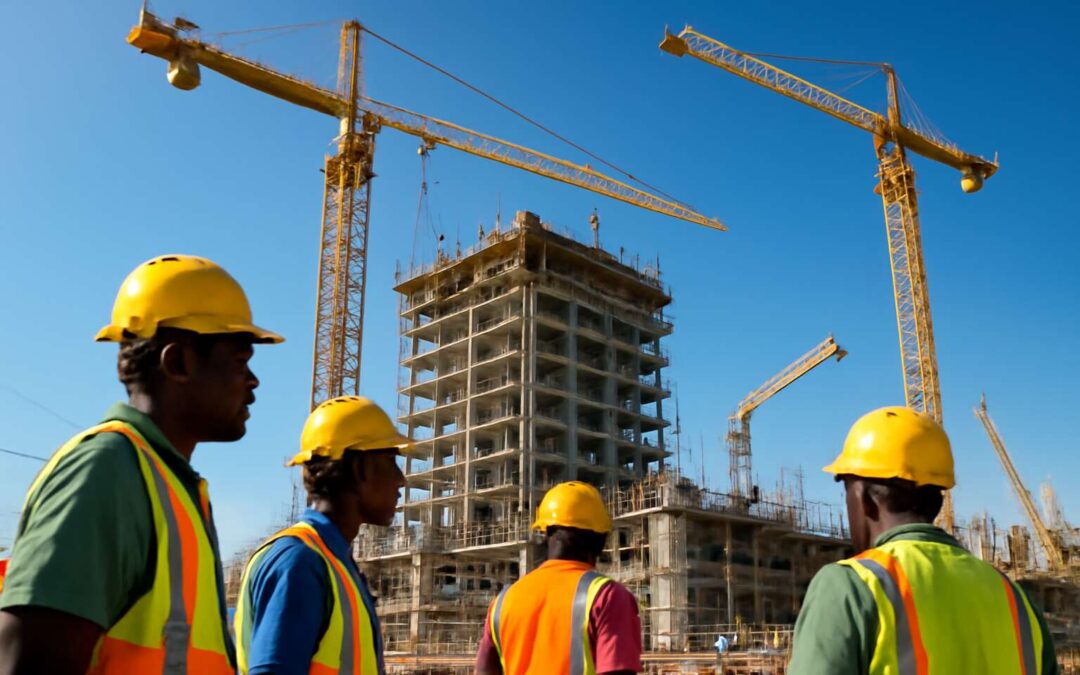
South African Construction Industry Overview
Market Size and Growth
The South African construction scene is buzzing with a steady pipeline of projects. For construction companies in south africa, local knowledge and practical delivery are non-negotiable. A single project can ripple through communities, creating jobs, spurring suppliers, and shaping city skylines!
Market size and growth hinge on infrastructure spend, housing development, and private investment. Gauteng and the Western Cape anchor activity, while disciplined project execution and strong supplier relationships keep margins stable in a volatile market.
- Infrastructure renewal and public works programs
- Residential and commercial development in urban centers
- Energy, water resilience, and climate-ready projects
The path forward for construction is practical, resilient, and deeply local.
Key Segments
South Africa’s construction scene hums with renewal and resilience. A single contract can ripple through towns, creating jobs and shaping skylines.
Key segments keep the engine running for construction companies in south africa:
- Infrastructure renewal and public works
- Residential and commercial development in urban centers
- Energy, water resilience, and climate-ready projects
These areas demand practical delivery, local know-how, and tight supplier relationships, turning projects into community wins!
The flow is pragmatic, the teams are local, and the opportunity sits in the details that keep sites safe, on time, and on budget for construction companies in south africa.
Major Players and Market Share
“The city is a blueprint of resilience,” a veteran engineer once told me, and cranes are the punctuation that finishes the sentence—truly, you feel the city breathe!
In this landscape, construction companies in south africa—like WBHO, Aveng, Murray & Roberts, Stefanutti Stocks, and Concor—win significant, multi-year contracts, driving public works and private development.
- WBHO
- Aveng
- Murray & Roberts
- Stefanutti Stocks
- Concor
Their success rests on local know-how, rigorous safety standards, and tight supplier networks that translate ambitious plans into on-time, on-budget delivery.
Recent Infrastructure Investment
“The city is a blueprint of resilience,” a veteran engineer once said, and cranes are the punctuation that finishes the sentence—truly, you feel the city breathe.
Across South Africa, recent infrastructure investment totals over R1 trillion, fueling public works and private developments. This windfall sustains the heartbeat of construction companies in south africa, driving multi-year contracts and local supplier networks.
Key investment themes shaping the pipeline include:
- Rail and road corridors
- Water and housing programs
- Renewable energy sites and industrial parks
Regional Opportunities
R1 trillion in infrastructure investment is reshaping South Africa’s cities, and construction companies in south africa are at the heart of the move. The skyline is learning to breathe again—new bridges, rail upgrades, water security projects. The mood is practical, not flashy, with projects that stay put for years.
Regional opportunities are emerging beyond the metros. Gauteng’s logistics spine, KwaZulu-Natal’s port-linked growth, the Western Cape’s housing expansions, and the Eastern Cape’s energy and manufacturing parks are directing bids and partnerships.
- Gauteng: urban renewal and rail rehabilitation
- Kwazulu-Natal: port upgrades and bulk logistics facilities
- Western Cape: climate-smart housing and precinct development
Local procurement and skilled trades networks reinforce resilience for construction companies in south africa. Regions prefer durable catalogs of local suppliers, and partnerships that can ride multi-year contracts with reliability and safety standards.
Challenges and Risks
The skyline holds its breath, steel catching the first light and telling a patient story of resilience. In South Africa, the work is practical, not glamorous—long horizons, careful budgeting, and the stubborn belief that durable spaces outlast every season. It’s a craft that endures.
For construction companies in south africa, risk travels in plain sight—financing gaps, shifting costs, and the slow gears of permitting.
- Cash-flow volatility that upends schedules
- Material price swings and procurement delays
- Regulatory changes and safety compliance pressures
Yet the craft persists, and we turn challenge into a measured cadence and ground ambition in the people who lay foundations day after day!
Service Offerings by South African Construction Firms
Residential Construction Services
We build what lasts—that’s the creed you’ll hear on SA job sites. Residential construction services span from clever design coordination to the moment you unlock the door, and a few follow-up cups of tea ensuring everything still fits after the first winter rain.
Here’s what you get with residential work from construction companies in south africa:
- Design coordination and architecture interfacing
- Turnkey home builds from foundation to finish
- Renovations, extensions, and open-plan transformations
- Energy-efficient retrofits and smart-home integrations
- Project management, on-site supervision, and safety compliance
Beyond bricks and beams, the real spice is project management, safety, and reliability—plus a dash of local know-how that keeps permits, acoustics, and water systems aligned with SA regulations. I’ve watched teams choreograph trades like a symphony, delivering on time and on budget without turning the site into a circus.
Commercial and Retail Build-Outs
A skyline that hums with possibility greets every street corner—the spaces that invite, welcome, and sell in one breath. In commercial and retail build-outs, construction companies in south africa blend speed with precision, turning bold brands into tangible experiences shoppers can feel the moment they step inside.
Service offerings span from shell-and-core to interior transformations that showcase a brand’s heartbeat.
- Shell-and-core shells ready for tenant fit-outs
- Tenant improvements and open-plan transformations that reflect brand storytelling
- Energy-efficient upgrades and smart-system integrations
- End-to-end project management, on-site supervision, and safety compliance
Beyond bricks and deadlines, the craft lies in coordination and regulatory savvy, a local sensibility that keeps acoustics, water, and access aligned with SA standards. These teams choreograph trades like a symphony, delivering on time and on budget, a hallmark of construction companies in south africa.
Industrial and Utilities Projects
In SA’s industrial and utilities landscape, uptime is currency. A 6% YoY surge in active projects marks a shift toward faster, smarter builds. These offerings—from feasibility and design to commissioning—are what you get from construction companies in south africa, delivering plants, utilities, and facilities that keep energy, water, and manufacturing humming with reliability.
Among the core service offerings, firms provide:
- Turnkey industrial facility construction and expansions
- Electrical, mechanical, and control systems integration
- Commissioning, performance verification, and start-up support
On-site coordination, regulatory compliance, and sustainability initiatives ensure projects meet SA standards and deliver long-term value to communities and industries alike.
Civil Engineering and Infrastructure
Civil engineering and infrastructure projects are the quiet engines of a modern economy, and in SA, active projects grew 6% year over year. In South Africa, construction companies in south africa keep communities moving by building reliable roads, bridges, water networks, and public facilities that stand the test of time.
These firms offer turnkey civil works and site development, from initial surveys through to handover. Core capabilities include earthworks, drainage, concrete and steel structures, utilities integration, and complex coordination with regulators to keep projects on track.
- Roads, highways, and bridge construction
- Water supply, stormwater, and wastewater networks
- Bulk earthworks, earth retention, and site grading
- Public buildings and essential infrastructure facilities
- Rail and other transit civil works
On-site coordination, safety, and environmental stewardship ensure compliance with SA standards while delivering long-term value to communities and industries alike. The best firms integrate design and construction to reduce risk and accelerate delivery across the country.
Project Management and Consulting
In the South African market, project management turns ambitious blueprints into real, durable structures. A surprising 9% year-over-year rise in capital allocations underscores a shift toward integrated delivery—where strategy meets field realities. For construction companies in south africa, the edge lies in aligning design, procurement, and on-site execution with clear governance and purposeful milestones. Progress, after all, is turning plans into pavement.
Service offerings include:
- Project governance and risk appraisal
- Cost and schedule optimization
- Regulatory compliance and stakeholder coordination
- Integrated design and construction oversight
Together, these services translate complex plans into reliable outcomes.
Buying and Partner Selection for SA Projects
How to Evaluate Construction Companies
Long before a shovel breaks ground, the calculus of partnership begins. For buyers navigating the market of construction companies in south africa, the process demands more than price. Industry signals suggest up to 60% of large builds hinge on partner alignment, making due diligence the first mover in risk management!
- Financial stability and payment discipline
- Safety track record and regulatory compliance
- Local capacity and subcontractor networks
- Operational transparency and contract flexibility
- Shared values and clear communication protocols
Beyond numbers, the narrative of any project unfolds through the rhythm of collaboration: a partner must translate vision into capacity, risk into resilience, and trust into steady delivery. Site visits, reference checks, and a disciplined financial audit complete the picture, revealing whether alignment holds under pressure.
Key Selection Criteria
Before the first trench draws its lines, a pact must outlast the budget. In the shadowed corridors of procurement, I listen for two things: intent and capacity. In South Africa’s climate, the right partner isn’t chosen by price alone; it’s chosen by readiness to translate risk into a resilient cadence.
Buying and partner selection hinge on enduring criteria, weighed with a quiet vow. For buyers navigating the landscape of construction companies in south africa, assess governance that won’t bend under pressure, cash flow discipline, safety culture on every shift, and the ability to mobilise local subcontractor networks into a living scaffold.
Beyond figures, I seek clarity: transparent milestones, plain change-control, and references that stay warm when storms gather. A genuine partner translates vision into concrete, risk into resilience, and trust into steady delivery.
Request for Proposal (RFP) Process
Two-thirds of misaligned partnerships stumble before the first trench lines are drawn, yet a pact can outlast budget storms. In SA procurement, I listen for intent and capacity—the quiet hinge on which risk becomes cadence. For buyers navigating construction companies in south africa, governance, cash-flow discipline, and safety culture aren’t optional; they’re prerequisites.
These are the tenets I audit in every RFP response.
- Governance you can trust under pressure
- Cash-flow discipline and clear subcontractor payments
- Safety culture on every shift
- Mobilisation of local subcontractor networks
- Transparent milestones and plain change-control
- Warm, verifiable references
A genuine partner translates vision into concrete delivery, turning risk into resilience and trust into steady performance. In this market, the right choice echoes through every milestone, and I’ve learned that real collaboration begins with intent, sustains with transparency, and endures with local stewardship!
Vendor Compliance and Certifications
A quarter of SA projects stall because vendor compliance falters, and that’s a hard truth for construction companies in south africa. For buyers, partner selection hinges on vendor compliance and certifications that withstand scrutiny on day one. The right partners convert risk into rhythm, not excuses.
- ISO 9001 quality management
- ISO 45001 safety management
- CIDB grading and BBBEE verification
- ISO 14001 environmental management
Beyond paperwork, due diligence should include audits, verifiable references, and clear subcontractor controls that protect delivery timelines and quality.
Contractual and Risk Considerations
A quarter of SA projects stall because vendor compliance falters. That hard truth tests buyers and their choice of partners among construction companies in south africa. On day one, the contract must spell out responsibilities, remedies, and risk allocation so delivery doesn’t derail in week two.
Contractual and risk considerations should cover the essentials from milestones to indemnities. Consider these levers:
- Clear scope, change control, and measurable milestones
- Aligned payment terms with milestone-based payments and retention
- Subcontractor oversight, insurance, and clearly defined liability
- Transparent dispute resolution and robust exit terms
Beyond the ink, due diligence means real-world checks—audits, references, and verifiable delivery histories—that protect timelines and quality. The right partner brings governance, accountability, and the grit to deliver, turning risk into rhythm rather than excuses!
Sustainability, Compliance and Technology in SA Construction
Green Building Standards and Certifications
In SA, sustainable builds aren’t buzzwords—they’re baseline. A 2023 industry pulse shows 12% of new projects pursuing formal green credentials, and that tide is rising—almost a whisper from the ledger. For construction companies in south africa, green performance means tighter bids and longer asset lifespans.
Compliance is a craft: traceable materials, waste reduction, and life-cycle reporting are expected. Technology acts as a force multiplier—BIM, digital twins, and modular off-site manufacturing sharpen control.
- Green Star SA certification
- NABERS-SA energy rating
- ISO 14001 environmental management
- SANS 10400-XA energy efficiency
These standards aren’t hurdles but milestones that give construction companies in south africa a clear path to responsible, technology-driven growth.
Regulatory Compliance in SA
Sustainability isn’t a trend; it’s the weather shaping SA construction. Across the sector, green performance is the baseline, with clients demanding transparency, efficiency, and life-cycle thinking. Compliance has become a craft—traceable materials, waste reduction, and rigorous life-cycle reporting. Technology acts as a force multiplier—BIM, digital twins, and modular off-site manufacturing sharpen control. For construction companies in south africa, this shift means tighter bids and longer asset lifespans.
- Traceable materials and transparent supply chains
- Waste reduction and life-cycle reporting
- BIM, digital twins, and modular off-site manufacturing as control levers
Sustainability, compliance, and technology aren’t isolated domains; they fuse to create a resilient, future-ready built environment. The emphasis is on measurable performance, auditable records, and adaptive workflows that keep projects on track even when conditions shift.
Digital Construction and BIM Adoption
Data is the new brick, and in SA construction it’s building the future! Sustainability isn’t a trend; it’s the weather that steers every project. As one SA builder puts it, the plan must be measurable, auditable, and alive.
Digital construction and BIM adoption turn plans into living simulations, letting teams test ideas before ground is broken. They empower material provenance, waste discipline, and lifecycle thinking across every phase.
- Material provenance and transparent sourcing
- Waste discipline and lifecycle intelligence
- BIM-enabled governance and off-site manufacturing strategies
In this fusion of sustainability, compliance, and technology, the SA built environment becomes resilient, adaptable, and future-ready. For construction companies in south africa, the magnet is measurable performance, auditable records, and steady, efficient workflows.
Safety Standards and Labor Laws
“Sustainability isn’t a trend; it’s the weather that steers every project.” In South Africa’s evolving built environment, safety standards and labor laws are weaving technology into every on-site decision. For construction companies in south africa, compliance becomes a living framework—measurable, auditable, and alive—much like the BIM models that mirror reality before a shovel meets ground.
- Safety governance linked to digital platforms and real-time reporting
- Labor-law compliance embedded in training, PPE, and worker welfare programs
- Off-site manufacturing and on-site oversight aligned with OHS Act and Construction Regulations
When sustainability, compliance and technology converge, the SA built environment becomes resilient and adaptable. The magnet for progress is clear: measurable safety performance, transparent records, and workflows that move with the pace of modern construction—without breaking a stride.
Sustainable Materials and Waste Management
Sustainability isn’t a trend; it’s the weather that shapes every build. For construction companies in south africa, sustainable materials and waste management aren’t optional—they’re the foundation of resilience and budgeting.
- Locally sourced materials to cut transport emissions and support circular supply chains
- Recycling and reuse of formwork, concrete, and metals to shrink waste streams
- Modular and off-site components that minimize offcuts and on-site scrap
Technology and compliance align here: digital provenance, waste diversion data, and lifecycle thinking become living records teams trust. Real-time reporting on waste streams, paired with green procurement, makes sustainability measurable rather than rhetorical.
Off-site manufacturing, rigorous oversight, and transparent reporting harmonize with regulations to keep sites safe while progress accelerates.
Regional Focus and Market Opportunities
Gauteng and the Economic Heartland
Gauteng is the economic heartbeat of South Africa, where dense cityscapes meet a web of transport arteries and a relentless appetite for growth. In this region—home to Joburg and Pretoria—the demand is both expansive and nuanced, shaping a landscape where construction companies in south africa can leverage scale and speed.
- Logistics hubs and freight corridors reward modular, time-efficient builds
- Urban renewal and mixed-use precincts blend housing, retail, and offices
- Resilient utilities and energy projects underpin growth in dense townships
Beyond the urban core, the Economic Heartland rewards firms adept at navigating public-private partnerships, risk-sharing, and adaptive design that honors heritage while accelerating delivery!
Western Cape and Tourism-Driven Developments
Western Cape stands at the confluence of sea, scenery, and a tourism engine that’s hard to ignore. City and coast alike are evolving through hospitality-driven developments, festival precincts, and upgraded transport nodes, nudging the region into a new era of capital turnover. For construction companies in south africa, this mix rewards speed, adaptability, and local engagement.
Key opportunities cluster around visitors and residents alike—lean, modular builds that respect heritage and climate. A small, agile project team can deliver hospitality, retail, and mixed-use assets faster than the old model.
- Tourism-led hotel and experience precincts
- Waterfront renewals, seafront promenades, and mixed-use hubs
- Airport access upgrades, road networks, and public transit
In Western Cape, the appetite for quality, sustainable construction is matched by a demand for careful stakeholder management and enduring design that thrives on a seasonal cadence.
Eastern Cape and Manufacturing Corridors
Eastern Cape’s industrial corridors shimmer with a double-digit uptick in private investment, a signal that speed and reliability are now essential currencies. Coega’s export engine and the resilient rails stitching Port Elizabeth to inland markets form a living map of opportunity, where manufacturing floors meet logistics parks in a choreography of efficiency. For construction companies in south africa, this is not merely growth; it’s a call to craft spaces that breathe with local craft, climate, and cadence.
Opportunity clusters around scalable facilities designed for adaptability, with modular shells and energy-ready cores that weather seasonal fluctuations. The region rewards green energy integration, agile procurement, and workforce partnerships that translate skilled craft into durable infrastructure.
- Coega SEZ expansions and corridor-linked supply chains
- Energy-stable industrial parks using solar and gas hybrid systems
- Training hubs that translate craftsmanship into durable infrastructure
Rail and port access unlock manufacturing corridors that blend assembly lines with warehousing, creating hubs for automotive components, textiles, and consumer goods. In this climate, the region invites the patient hand and the bold plan characteristic of trusted construction companies in south africa, where enduring design meets dynamic demand.
Infrastructure Corridors and Public-Private Partnerships
Regional focus now centers on scalable corridors that connect coast to interior. Rail and port access unlock manufacturing clusters and seamless logistics. For construction companies in south africa, this is a call to pair local craft with resilient energy systems and adaptive facilities.
- Rail and port modernization that speeds goods through corridors
- Energy-stable industrial parks with solar or gas-hybrid systems
- Public-Private Partnerships that align design, build, and long-term operation
- Training hubs turning skilled craft into durable infrastructure
These opportunity clusters reward agile procurement, modular shells, and adaptable cores that weather seasonal demand. The PPP framework is a catalyst for shared risk, transparent timelines, and sustained maintenance across regions.
Emerging Regional Markets
Regional growth is rewriting the map of South Africa’s economy, with cross-country trade volumes rising and corridors swelling in importance. For construction companies in south africa, this signals a pivot from isolated projects to scalable, coast-to-interior infrastructure that births reliable, long-horizon partnerships.
Emerging regional markets prioritize rail-enabled ports and inland manufacturing clusters, where modular shells and adaptable cores meet seasonal demand. Public-Private Partnerships stand as catalysts, aligning design, build, and maintenance while transforming risk into a shared horizon.
Three opportunity clusters anchor the regional focus:
- Coastal rail corridors linking production zones
- Inland logistics parks with solar or gas-hybrid energy
- Port-adjacent distribution nodes for rapid turnover
These markets reward speed, transparency, and skilled craft at scale—qualities every resilient contractor seeks.
