by | Jul 1, 2025 | Air Conditioning
Understanding Why Your AC Smells Like Vinegar
Causes of Vinegar Odor in Air Conditioning – Common reasons for vinegar-like smells emanating from AC units
It’s startling when your air conditioning smells like vinegar — a sharp, pungent odour that seems out of place in your home. This peculiar scent often signals underlying issues that go beyond simple maintenance lapses. Surprisingly, up to 30% of AC units develop odours due to microbial growth or chemical reactions within the system.
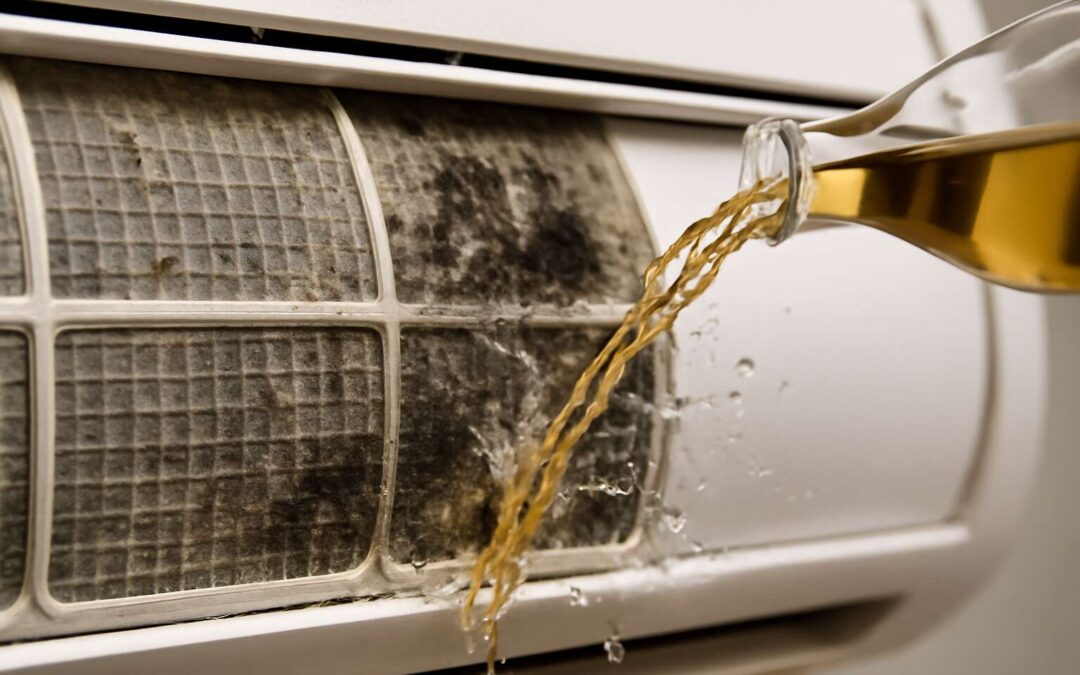
One common cause of the air conditioning smells like vinegar is the build-up of bacteria and mould in the evaporator coil or drain pan. When moisture accumulates in these areas, it creates an ideal environment for odour-causing microbes to thrive. Over time, these microbial colonies release volatile organic compounds (VOCs), which can resemble the smell of vinegar or other sour smells.
Additionally, chemical residues from cleaning agents or the use of certain refrigerants can react with the internal components, generating a vinegar-like odour. It’s also worth noting that poor drainage or clogged filters exacerbate the problem, trapping moisture and fostering microbial growth.
- Clogged condensate drain
- Accumulated mould or bacteria
- Chemical reactions within the system
all contribute to this unsettling odour. Recognising these causes helps in understanding why your air conditioning smells like vinegar and prompts the necessary steps to resolve the issue effectively.
The Science Behind the Vinegar Smell – Explaining microbial growth and chemical reactions in AC systems
When your air conditioning smells like vinegar, it’s more than just an olfactory nuisance; it’s a subtle warning sign of complex internal processes at play. The pungent aroma often results from microbial growth or chemical reactions within the system, transforming your cooling device into an unexpected source of sour scents. Interestingly, research indicates that up to 30% of AC units develop such odours due to the proliferation of bacteria and mould, thriving in the damp, dark corners of the system.
This microbial activity produces volatile organic compounds (VOCs), which are responsible for that sharp, vinegar-like smell. These compounds are essentially the microbial microbes’ way of signalling their presence — a biological ‘hello’ that’s frankly less than inviting. The AC’s evaporator coil or drain pan, when left damp and unclean, creates the perfect environment for these microbes to flourish. Over time, chemical reactions—sometimes triggered by residues from cleaning agents or refrigerants—can also produce the sour odour. It’s a complex dance of biology and chemistry, with your AC unwittingly playing host to microbial colonies and chemical residues that generate the distinctive vinegar scent.
In essence, understanding why your air conditioning smells like vinegar involves recognising the delicate interplay between microbial growth and chemical reactions within the system. Regular maintenance and vigilant inspection are your best allies in preventing these olfactory surprises, keeping your cool without the unexpected sour twist.
Common Sources of Vinegar Smell in Air Conditioners
Mold and Mildew Growth – How mold and mildew contribute to unpleasant odors
It’s startling how a seemingly innocent air conditioning unit can emit such a pungent odour—like vinegar—disrupting the comfort of even the most serene environments. The culprit often lies beneath the surface, rooted in the insidious growth of mold and mildew within the system. These microorganisms thrive in the damp, dark corners of your air conditioning unit, feeding on residual moisture and organic debris that accumulate over time.
When mold and mildew take hold, they initiate chemical reactions that produce volatile organic compounds (VOCs). These emissions, coupled with microbial activity, result in that unmistakable vinegar-like smell. To understand the severity of this issue, consider that mold spores are not just odorous nuisances but potential health hazards, especially when dispersed throughout indoor air.
In essence, the presence of mold and mildew in air conditioning systems is a silent, persistent threat—one that transforms a simple cooling device into a source of discomfort and concern. This growth is often invisible to the naked eye but can be detected through that harsh, sour odour reminiscent of vinegar, signalling an urgent need for inspection and remediation.
Bacterial Buildup – Role of bacteria in causing vinegar-like smells
There’s an eerie allure to the scent that wafts from an air conditioning unit—sharp, sour, almost sinister—a telltale sign that all is not well within its mechanical depths. Among the many whispers of trouble, bacterial buildup stands out as a primary culprit behind those unsettling air conditioning smells like vinegar. It’s as if unseen microbes have taken root, transforming the cold, sterile environment into a fermenting chamber of microbial malice.
This bacterial infiltration thrives in the damp, shadowy recesses of your AC system, feeding on organic debris and residual moisture that have accumulated over time. As these bacteria flourish, they produce volatile organic compounds—chemical signatures that evoke that pungent, vinegar-like aroma. The odour is often an unwelcome herald of the unseen microbial invasion, turning a simple cooling device into a source of discomfort and concern.
In some cases, the bacteria form colonies that are difficult to detect visually but are betrayed by that unmistakable sour smell. It’s a haunting reminder of the fragile balance within your HVAC system—an invisible battle between cleanliness and microbial chaos. That initial whiff of vinegar is not just a fleeting nuisance; it’s a warning sign of bacterial buildup, demanding attention before the microbial menace takes hold entirely.
Dirty or Clogged Drain Lines – Impact of drain line blockages on odor formation
Few odours evoke a sense of unease quite like the sharp, sour scent of vinegar wafting from an air conditioning unit. One insidious culprit behind this unsettling aroma is a blocked or dirty drain line. When the condensate drain becomes clogged, it creates a breeding ground for moisture to stagnate, allowing mould, bacteria, and organic debris to accumulate.
This blockage not only disrupts the normal drainage process but also causes residual water to pool within the system. Over time, this stagnant environment encourages microbial growth, which releases that unmistakable vinegar-like smell. As the bacteria and mould colonies flourish, they produce volatile organic compounds—potent enough to turn a seemingly innocuous cooling device into a source of discomfort.
In some cases, the odour intensifies unexpectedly, revealing the silent, creeping infestation lurking within the drain line. Recognising this common source of air conditioning smells like vinegar can help prevent further microbial chaos, keeping your indoor air fresh and odour-free. Remember, a clogged drain line isn’t just an inconvenience; it’s a gateway for microbial invasion that can turn your climate control system into a fermenting chamber of microbial malice.
Accumulation of Organic Matter – Effects of debris, dirt, and organic residues inside the unit
In the shadowy realm of indoor climate control, few scents evoke a more haunting sensation than the sharp, sour tang of vinegar wafting from your air conditioning unit. This unsettling odour often signals a clandestine buildup of organic matter, lurking unseen within the labyrinth of your system. As dust, dirt, and organic residues accumulate, they create a fertile ground for microbial fermentation, transforming your once-cool sanctuary into a fermenting chamber of odour.
Inside the confines of your AC, organic debris—leaves, pollen, and even microscopic particles—can settle and decay, feeding the microbial colonies that produce that distinctive vinegar smell. Over time, these residues turn into a thick, sticky film that coats the evaporator coils and internal surfaces. The odour intensifies as these organic materials decompose, releasing volatile compounds that taint the air with their sour, pungent aroma. Such accumulation isn’t merely a benign nuisance but a creeping menace that can lead to persistent, unpleasant air conditioning smells like vinegar.
Sometimes, this odour sneaks up unexpectedly, revealing the silent invasion of organic decay within your system. Recognising the telltale signs—such as a persistent sour smell—can serve as a warning of the hidden chaos fermenting behind the scenes. The presence of organic matter is a dark reminder that even the most advanced cooling systems are vulnerable to the relentless march of decay, turning the once-fresh air into a miasma of microbial malice.
Signs and Symptoms of a Vinegar Smell in Your AC
Persistent Odor Even When Off – What ongoing smells indicate
When your air conditioning smells like vinegar even when it’s turned off, it can be unsettling—like an unwelcome ghost lingering in your home. Persistent odours are often a sign that microbial activity or chemical reactions are quietly taking hold inside your system. If the smell refuses to fade, it’s a clear indication that something deeper is amiss. Sometimes, the odour is faint, just enough to nag at your senses, but other times, it’s overpowering, filling the entire room with a sour, pungent scent.
One of the most common signs of a vinegar-like smell is its persistence, even after the unit has been off for several hours. This ongoing odour suggests that bacteria or mould may be thriving within the ductwork or condensate drain, creating a cycle of foul smells that never quite dissipate. If you notice this smell lingering, it’s worth inspecting for other symptoms such as increased allergy symptoms, or a feeling of stuffiness that refuses to clear. In many cases, the smell of vinegar in your air conditioning system signals a need for professional cleaning and maintenance to restore freshness and air quality.
Reduced Air Quality and Respiratory Issues – Health impacts of mold and bacteria in AC units
When your air conditioning smells like vinegar, it’s not just a minor annoyance — it’s a red flag for your health and home environment. Persistent odours can silently sabotage indoor air quality, making breathing feel like a chore. If you notice a sour, pungent scent lingering even when the unit is off, it’s often a sign that mould, bacteria, or other microbial activity are flourishing within your system. This microbial growth doesn’t just cause an unpleasant smell; it can also trigger respiratory issues, especially for allergy sufferers or those with sensitive lungs.
One of the most alarming signs is a noticeable decline in air quality, accompanied by symptoms such as sneezing, coughing, or a tight chest. The smell of vinegar isn’t just a nuisance; it’s an indication that harmful microorganisms are thriving inside your AC unit. Over time, this bacterial buildup can lead to increased indoor pollutants, which are difficult to eliminate without proper cleaning. If these symptoms persist, it’s likely that your air conditioning smells like vinegar because of an underground party of mould and bacteria causing chaos inside your system.
In some cases, the constant presence of this sour odour can even cause a feeling of stuffiness that just won’t go away. This isn’t merely an annoyance; it’s a warning sign that your air conditioning system may be contributing to poor health outcomes. Recognising these symptoms early can save you from more serious respiratory complications down the line. Remember: if your AC smells like vinegar, it’s high time to investigate further, as ignoring it could lead to long-term indoor air quality issues.
Visible Mold or Discoloration – Spotting mold or mildew around vents and filters
When your air conditioning smells like vinegar, it’s often more than just a fleeting odour — it’s a whisper from within that something is amiss. One of the most telling signs is the presence of visible mould or discolouration around your vents and filters. These telltale signs act as silent sentinels, revealing microbial colonies flourishing behind the scenes. Mold can appear as fuzzy patches or darkened streaks, often nestled where moisture tends to linger.
Spotting these visual clues is crucial, especially if the sour smell persists. Sometimes, the affected areas are subtle, like a faint shadow of discolouration creeping around edges, or tiny specks of mildew clinging stubbornly to surfaces. Keep a close eye on your vents, filters, and drain pans—these are prime real estate for microbial growth that fuels the vinegar-like odour.
- Persistent sour smell
- Visible patches of mould or mildew
- Discolouration on vents or filters
- Unusual moisture or dampness around the unit
Recognising these symptoms early can make all the difference, transforming a simple nuisance into a health-conscious intervention. After all, the odour of vinegar in your air conditioning isn’t just an aesthetic issue—it’s a sign that your system might be harbouring unseen microbial chaos. Catching these visual indicators not only restores air quality but also safeguards your home’s indoor environment from unseen threats.
How to Identify If Your AC Smells Like Vinegar
Visual Inspection Tips – Checking for mold, dirt, and debris
Many homeowners are surprised to notice that their air conditioning smells like vinegar, especially when it’s not linked to cleaning supplies or household products. Identifying the root cause early can save you from long-term damage and health issues. Visual inspection is a straightforward yet essential step in diagnosing this peculiar odour. By systematically examining your AC unit, you can uncover clues about what’s causing the vinegar-like smell.
Start with a close look around the vents, filters, and drain pan for any visible signs of mould, mildew, or discolouration. These often appear as green or black patches, indicating microbial growth. Dirt and debris tend to accumulate in these areas and can ferment over time, contributing to the vinegar-like odour. Additionally, check the drain lines for blockages or algae build-up, as these can trap organic matter and foster bacterial growth, leading to the distinctive smell.
A quick visual check can reveal the underlying issue—whether it’s mould, dirt, or organic residues—that causes your air conditioning to smell like vinegar. Spotting these signs early is key to maintaining a healthy, odour-free indoor environment.
Smell Test and Environmental Conditions – Assessing smells during operation and in different environments
When your air conditioning begins to emit an unmistakable odour of vinegar, it’s more than a mere inconvenience—it’s a signal that something within your system is amiss. To discern whether your AC truly smells like vinegar, perform a simple yet insightful smell test during operation. Notice if the pungent scent intensifies when the unit is running or dissipates when turned off. This observation can help isolate the source, revealing whether the odour is consistent or linked to specific environmental conditions.
Environmental factors also play a crucial role. Humid conditions, for instance, create a perfect breeding ground for microbial growth, which often manifests as a vinegar-like smell. Pay attention to how the odour fluctuates in different settings or seasons. If the smell becomes more pronounced during high humidity or after prolonged periods of inactivity, these clues can guide you toward the real culprit. Recognising these subtle cues ensures that you’re not merely reacting to a fleeting smell but understanding its root cause.
Professional Inspection Recommendations – When to get a technician involved
When your air conditioning starts to emit an unmistakable smell of vinegar, it’s a warning sign that demands expert attention. Recognising whether your AC truly smells like vinegar requires a keen eye and a discerning nose. If the odour intensifies during operation or lingers persistently, it’s time to consider a professional inspection. Such a smell could indicate microbial growth, bacterial buildup, or mould issues lurking within your system. These elements not only compromise air quality but can also pose health risks.
Scheduling a visit from a qualified technician is essential if you notice ongoing vinegar-like odours despite regular cleaning or if the smell worsens over time. An expert will perform a comprehensive assessment, including checking drain lines, filters, and internal components, to uncover hidden sources of odour. Remember, ignoring the smell of vinegar in your air conditioning can lead to more severe problems down the line—so trust the professionals to restore your system’s purity and efficiency!
Effective Solutions for Eliminating Vinegar Odors from Your AC
Cleaning or Replacing Air Filters – Ensuring clean filters to prevent mold growth
When your air conditioning starts to smell like vinegar, it’s more than just an annoyance—it’s a warning sign of underlying microbial activity. A simple yet effective way to combat this odour is by thoroughly cleaning your AC unit. Regular cleaning disrupts the environment that fosters bacteria and mould growth, which are primary culprits behind the vinegar-like smell. Ensuring your system is spotless not only eliminates current odours but also prevents future ones from taking hold.
Another vital step is replacing or upgrading your air filters. Dirty filters trap organic matter, providing a breeding ground for bacteria and mould. By maintaining clean filters, you cut off their food source and inhibit microbial proliferation. It’s advisable to check filters monthly and replace them at least every three months. Proper filtration keeps the air quality high and staves off persistent smells that can linger even when the unit is off.
Furthermore, consider inspecting drain lines and removing any organic debris blocking the pathway. A clear drain line prevents stagnant water from accumulating, which is often the breeding ground for bacteria responsible for the vinegar odour. Incorporating these steps into your regular maintenance routine ensures your AC remains fresh and odour-free, safeguarding both your comfort and health.
Cleaning Drain Lines and Pans – Removing blockages and mold buildup
Few sensations are as unsettling as the unmistakable odour of vinegar wafting from your air conditioning unit. This pungent smell often signals more than a simple inconvenience; it’s a sign that microbial activity has taken hold within your system. One of the most effective ways to combat this is by thoroughly cleaning the drain lines and pans. Over time, organic debris, dirt, and mould can accumulate, creating a breeding ground for bacteria that produce that characteristic vinegar-like smell.
To ensure your AC stays fresh, it’s essential to remove blockages and prevent mould buildup. Begin by inspecting the drain line for any obstructions, such as dirt or organic matter, and clear them out carefully. It’s equally important to clean the drain pan, as standing water can foster microbial growth. You might consider using a mixture of vinegar and water or specialised cleaning solutions designed for HVAC systems to disinfect these components effectively.
For a systematic approach, follow this process:
- Turn off the AC unit and disconnect power for safety.
- Flush the drain line with a cleaning solution or a mixture of vinegar and water.
- Use a wet-dry vacuum to remove any residual debris from the drain line.
- Clean the drain pan thoroughly, removing any visible mould or discolouration.
Regular maintenance of drain lines and pans not only eradicates the immediate vinegar smell but also acts as a preventative measure against future microbial proliferation. Ensuring these components are free of blockages and mould is vital for maintaining clean, odour-free air conditioning. Remember, a well-maintained system isn’t just about comfort; it’s about safeguarding your health and the air quality within your environment!
Disinfecting the System – Using appropriate cleaning agents to kill bacteria and mold
When your air conditioning unit starts emitting a distinct vinegar-like odour, it’s more than just an unpleasant scent—it’s a sign that microbial activity has taken hold within your system. Disinfecting the system with appropriate cleaning agents is essential to eliminate these odours effectively. Using specialised solutions designed for HVAC systems ensures that bacteria and mould spores are thoroughly eradicated, restoring fresh air quality.
One of the most effective solutions involves applying a disinfectant that targets microbial growth, which is often the culprit behind the air conditioning smells like vinegar. These cleaners penetrate deep into drain lines, pans, and internal components, killing the bacteria and mould responsible for that pungent odour. For added assurance, a systematic approach combining chemical disinfectants with physical cleaning methods can make all the difference.
For thorough disinfection, consider the following steps:
- Turn off the AC unit and disconnect the power supply for safety.
- Apply a specialised HVAC disinfectant directly into the drain pan and along the drain line.
- Use a mixture of vinegar and water or a commercially available cleaning solution to flush the system.
- Allow the disinfectant to sit for a few minutes to ensure microbial spores are effectively killed.
- Use a wet-dry vacuum to remove residual debris and excess solution from the drain line.
Regularly disinfecting your air conditioning system not only eradicates the persistent vinegar odour but also safeguards against future microbial buildup. Remember, consistent maintenance of these components acts as a barrier against mould, bacteria, and the odours they produce—keeping your environment fresh and healthy. When it comes to eliminating air conditioning smells like vinegar, a proactive approach with effective disinfecting solutions truly makes all the difference in maintaining optimal indoor air quality.
Improving Ventilation and Humidity Control – Reducing moisture that fosters microbial growth
When your air conditioning smells like vinegar, it’s as if a ghostly whiff of sourness has taken up residence within your cooling system. Beyond the immediate discomfort, this odour signals a more insidious battle: microbial activity thriving amidst the damp, dark corners of your unit. Improving ventilation and controlling humidity become vital allies in this silent war against odours, for moisture acts as a fertile ground for bacteria, mould, and mildew to flourish.
To combat the pungent vinegar scent, enhancing airflow and reducing indoor humidity levels can be transformative. Ventilation systems that circulate fresh air dilute odours and displace stale, stagnant air. Simultaneously, employing dehumidifiers or moisture absorbers creates an inhospitable environment for microbial growth, thus preventing the cyclical release of odours like vinegar.
- Use exhaust fans in kitchens and bathrooms to expel excess moisture.
In tandem with improved ventilation, maintaining optimal humidity—ideally between 40-50%—can significantly diminish the conditions conducive to microbial proliferation. Regularly inspecting and servicing your air conditioning system ensures that moisture does not accumulate unnoticed. When combined, these measures forge a path towards fresher air, free from the sour-scented spectre that often accompanies air conditioning smells like vinegar. It’s a delicate dance between environment and equipment, where clarity of air is both a necessity and a triumph.
Preventative Measures to Avoid Vinegar Smell in the Future
Regular Maintenance Schedule – Scheduling professional inspections and cleaning
Prevention is your best armour against the persistent problem of air conditioning smells like vinegar. Regular maintenance not only keeps your system running smoothly but also acts as a formidable barrier against microbial growth that causes those foul odours. Scheduling professional inspections and cleaning ensures any developing issues are caught early, preventing the vinegar-like smell from taking hold. Without proper upkeep, organic matter and bacteria can silently accumulate, turning your cool comfort into a source of discomfort.
To stay one step ahead, consider implementing a preventative routine that includes:
- Periodic professional system inspections
- Scheduled cleaning of drain lines and pans
- Timely replacement of filters
By adhering to a proactive maintenance schedule, you can nip potential problems in the bud, significantly reducing the chances of your air conditioning smelling like vinegar. Regular attention to your AC system fosters a healthier environment and ensures your cooling comfort remains fresh and odour-free all year round.
Home Humidity Management – Controlling indoor moisture levels
In the realm of home comfort, few odours are as disconcerting as when your air conditioning smells like vinegar. This unexpected pungency not only disrupts the serenity of your sanctuary but also signals an underlying microbial mischief brewing within your cooling system. Interestingly, managing indoor humidity plays a pivotal role in preventing this olfactory offence from becoming a persistent guest.
By exercising vigilant moisture control, homeowners can significantly diminish the likelihood of microbial growth that leads to vinegar-like odours. Implementing simple yet effective measures—such as maintaining optimal humidity levels and ensuring proper ventilation—can act as a formidable defence. For instance, using dehumidifiers or exhaust fans in damp areas keeps moisture at bay, depriving bacteria and mould of their cosy habitat.
- Monitor and regulate indoor humidity to stay within the ideal range of 40-60%
- Utilise moisture-absorbing products like silica gel packs or moisture traps in high-humidity zones
- Ensure proper airflow by opening windows or using ventilation systems to prevent stale, damp air from lingering
These preventative measures cultivate an environment inhospitable to microbial proliferation, thus preserving the freshness of your air conditioning and shielding it from that insidious vinegar odour. Ultimately, a well-balanced humidity level not only safeguards your AC from unwelcome smells but also promotes a healthier, more comfortable living space—because no one enjoys their home smelling more like a pickle jar than a haven of relaxation!
Using Air Purifiers and Dehumidifiers – Additional tools to improve air quality
When your air conditioning smells like vinegar, it’s not just a minor inconvenience; it’s a red flag signalling microbial mischief lurking within your cooling system. Fortunately, the right preventative measures—like harnessing air purifiers and dehumidifiers—can transform your home into a microbial-free zone. These tools don’t just mask odours; they actively improve air quality and keep that insidious vinegar scent at bay.
Air purifiers, equipped with HEPA filters, are particularly effective at capturing airborne bacteria and mould spores that contribute to that unwelcome vinegar aroma. Meanwhile, dehumidifiers are the unsung heroes of moisture control, reducing humidity levels to a safe 40-60%, which deprives bacteria and mould of their cosy habitat. Together, these devices create an environment hostile to microbial growth, helping your air conditioning stay fresh and odour-free.
Implementing a combination of these tools—alongside routine maintenance—can significantly reduce the chances of your AC smelling like vinegar. It’s a small investment in your home’s health and comfort, ensuring that your sanctuary remains a haven, not a pickle jar!
Monitoring and Addressing Early Signs – Proactive approaches for early detection
In the silent depths of your home, where comfort should reign supreme, an insidious whisper emerges—air conditioning smells like vinegar. This unwelcome odour is often a harbinger of microbial misadventures within your cooling system, signalling a need for vigilant monitoring. To prevent such unwelcome surprises, adopting proactive measures is paramount. Early detection becomes your strongest ally in maintaining an odour-free sanctuary.
Engaging in regular visual inspections can reveal the first hints of microbial activity. Look for discolouration, mould around vents, or accumulated debris that might serve as a breeding ground. Sometimes, even a gentle smell test during operation can unveil subtle hints of vinegar-like scent—an early warning sign that microbial growth is underway. Keeping a keen eye and nose on these signs allows you to address issues before they escalate into pervasive odours.
- Establish a routine schedule for inspecting and cleaning your air conditioning system.
- Maintain optimal humidity levels—ideally between 40-60%—to create an environment hostile to bacteria and mould.
- Utilise air purifiers equipped with HEPA filters to trap airborne spores before they settle into your system.
By staying vigilant and acting swiftly at the first signs of trouble, you can thwart the emergence of that telltale vinegar smell. Prevention through consistent monitoring and early intervention ensures your home remains a haven of fresh, pure air—free from microbial mischief and odorous intrusions.
by | Jul 1, 2025 | Air Conditioning
Understanding Air Conditioning Installation Cost Factors
Type of Air Conditioner – Different models and brands influence installation prices
When it comes to air conditioning installation price, the devil is truly in the details. The type of air conditioner you choose can dramatically sway the final bill—think of it as the difference between a humble fan and a state-of-the-art ducted system. Different models and brands each have their own price tags, and this can influence not only the unit cost but also installation complexity. For example, a high-end inverter model might come with a premium price tag but promises energy efficiency that could save you a fortune in the long run.
Some models are more straightforward to install, requiring minimal modifications to your existing infrastructure. Meanwhile, others—like multi-split systems—may demand extra labour, specialised parts, and even structural adjustments. Here’s a quick rundown of factors that impact the air conditioning installation price:
- The type of air conditioner (split system, ducted, portable, etc.)
- Brand reputation and model specifications
- The complexity of installation (easy wall-mount vs. extensive ductwork)
- Additional components needed, such as new wiring or drainage systems
All these elements combine to determine whether that sleek, whisper-quiet unit will cost a little or a lot more than expected. In essence, the choice of model and brand doesn’t just affect your comfort but also your budget—so pick wisely!
Unit Size and Capacity – How cooling capacity impacts costs
Imagine a home where every corner remains perfectly temperate, no matter how fierce the summer heatwave rages outside. The secret? The right-sized air conditioning system. When considering the air conditioning installation price, one of the most pivotal factors is the unit’s size and cooling capacity. Too small, and it’ll struggle to keep your space cool; too large, and it’ll waste energy and inflate costs unnecessarily.
Cooling capacity, measured in BTUs or kilowatts, directly influences installation costs. Larger units require more extensive ductwork, upgraded electrical systems, and sometimes structural modifications. As a result, the air conditioning installation price can increase significantly with capacity. To navigate this, many professionals recommend a tailored approach—matching the system’s size precisely to your space. This ensures optimal efficiency and cost-effectiveness, preventing any surprises when the bill arrives.
Installation Complexity – Factors like home layout and existing ductwork
Understanding what drives the air conditioning installation price is crucial when planning a cooling upgrade. One of the most significant factors is the complexity of the installation process, which can vary dramatically depending on your home’s layout. A straightforward, single-story property with an existing duct system will typically incur lower costs. Conversely, a multi-storey residence with a sprawling floor plan or unique architectural features can turn a simple install into a complex challenge.
Structural hurdles such as thick walls, limited access points, or old electrical wiring can add layers of difficulty. In some cases, specialised equipment or custom modifications are necessary, which inevitably pushes the air conditioning installation price higher. For example, homes without pre-existing ductwork may require a full system retrofit, dramatically increasing labour and material costs.
To better understand these variables, consider the following:
- The home’s overall size and design complexity
- The condition and accessibility of existing ductwork and electrical systems
- The need for structural modifications or customised fittings
Ultimately, the more intricate the installation, the more it will impact the final air conditioning installation price. It’s a delicate dance between technical demands and budget, where every obstacle can add a surprising twist to the cost narrative.
Additional Equipment and Features – Smart controls, multi-zone systems, and air purifiers
As the whispers of summer grow louder, the true magic behind an efficient cooling system reveals itself—not just in the chill it provides but in the intricate dance of costs that underpin its installation. When exploring the realm of air conditioning installation price, one must consider that additional equipment and features often cast their spell, transforming a simple upgrade into a bespoke masterpiece. For instance, smart controls breathe intelligence into your system, allowing you to command your cooling realm with a mere tap or voice command. Multi-zone systems, on the other hand, conjure customised comfort for different chambers, albeit at a premium.
Air purifiers, woven seamlessly into the system’s fabric, enhance air quality and elevate the entire experience—yet, their inclusion can significantly inflate the air conditioning installation price. These enhancements are more than mere luxuries; they are vital enchantments that turn a basic fixture into a sanctuary of health and comfort.
- Additional equipment such as smart controls and air purifiers
- Complex multi-zone configurations for personalised comfort
- Customised fittings to accommodate unique architectural features
All these elements, while elevating the system’s prowess, inevitably influence the final air conditioning installation price, forging a balance between technological marvels and budget considerations. Every feature added is a chapter in the grand narrative of your cooling system’s cost, where each choice shapes the story of comfort and efficiency.
Labor Costs – Variations based on location and contractor expertise
When delving into the realm of air conditioning installation price, one must appreciate that labour costs can vary as dramatically as the seasons themselves. In bustling urban centres, where tradespeople are in high demand, the expense of skilled labour often escalates, reflecting the intricate dance of timing and expertise. Conversely, in more rural or less saturated areas, these costs tend to soften, offering a different financial flavour.
Factors such as the complexity of the installation—whether it involves retrofitting an older property or navigating tight spaces—also influence labour charges. A straightforward wall-mounted unit may require only a few hours of work, but a multi-zone system with customised fittings can stretch the timeline and, consequently, the cost. To better understand, consider this:
- Location: metropolitan areas command higher fees.
- Contractor expertise: seasoned professionals may charge a premium for their specialised skills.
- Installation complexity: architectural features and existing infrastructure can either streamline or complicate the process.
Ultimately, the air conditioning installation price is a delicate balance, where labour costs intertwine with the unique demands of each project, creating a mosaic of factors that shape your cooling system’s journey into your home.
Average Price Range for Air Conditioning Installation
Basic Central Air Conditioning Systems – Typical costs and what they include
In the realm of home comfort, few investments resonate with as immediate an impact as air conditioning installation, yet the cost remains a nuanced affair. On average, basic central air conditioning systems tend to fall within a price range of £2,500 to £5,500. This spectrum encompasses not only the unit itself but also the essential labour, ductwork modifications, and calibration to ensure optimal performance. It’s tempting to focus solely on the initial outlay, but the true air conditioning installation price often hinges on the intricacies of your home’s architecture and the complexity of the installation process.
For those seeking a clearer picture, consider the key elements that influence the final figure: the size of the unit, existing infrastructure, and optional add-ons such as advanced smart controls or multi-zone configurations. The variation in labour costs, driven by regional differences and contractor expertise, can significantly sway the overall price. In many instances, understanding these components reveals that the air conditioning installation price is not merely a figure but a reflection of tailored comfort and lasting efficiency.
Ductless Mini-Split Systems – Price differences and advantages
When considering the air conditioning installation price for ductless mini-split systems, it’s important to recognise that these units often come with a different cost structure compared to traditional central systems. Typically, the average price range for installing a ductless mini-split varies between £1,500 and £4,000. This variation largely depends on the number of zones, the complexity of the installation, and the additional features you might opt for.
One of the key advantages of ductless mini-split systems is their flexibility and efficiency. They’re ideal for homes where ductwork isn’t an option or for upgrading specific rooms without overhauling the entire infrastructure. This targeted approach often results in a more favourable air conditioning installation price, especially when compared to extensive duct modifications.
- Number of zones required
- Ease of access for installation
- Optional smart controls or air purification features
While the initial investment might seem higher in some cases, the long-term energy savings and customised comfort can justify the cost. Ultimately, the air conditioning installation price for ductless mini-split systems reflects a tailored approach to cooling that balances budget with performance, making it a smart choice in many scenarios.
High-Efficiency and Premium Models – Cost considerations for advanced features
High-efficiency and premium air conditioning models command a significant premium, often reflecting the advanced technology and luxurious features they bring to modern homes. While standard units may suffice for many, embracing an upgraded system with smart controls, multi-zone capabilities, or air purification can elevate the experience but also impact the air conditioning installation price. These sophisticated systems tend to range between £3,500 and £8,000, depending on the complexity and desired outcomes.
When considering these costs, it’s essential to recognise that the investment isn’t solely about immediate comfort. It’s an exploration of how technology can redefine what it means to live in harmony with your environment. The added features, though seemingly incremental, often translate into long-term savings and a more personalised comfort—an investment in quality and longevity.
Cost Differences by Region – How geographic location influences pricing
The cost of air conditioning installation varies markedly depending on where you are in the UK. In bustling urban centres like London, the price range typically stretches from £4,000 to £9,000, reflecting the higher labour costs and complex infrastructure. Conversely, in more suburban or rural regions, prices might dip closer to £3,500, making the investment more accessible. This regional disparity isn’t incidental; it’s driven by factors such as the local cost of living, contractor availability, and the intricacies of installing systems in older homes with limited space for ductwork.
For example, areas with historic buildings often demand specialised installation techniques that can add to the overall air conditioning installation price. Meanwhile, newer developments with modern insulation and open-plan layouts may see more straightforward installations, reducing costs. Understanding these regional nuances can help homeowners better anticipate the true investment needed for a cooling solution that’s both efficient and tailored to their environment.
Factors That Can Increase or Decrease Installation Costs
Existing System Compatibility – Upgrades vs. new installations
When considering the air conditioning installation price, it’s essential to recognise how existing system compatibility can dramatically influence costs. An upgrade might seem straightforward, but if your current infrastructure is outdated or incompatible, the price can skyrocket. For instance, converting an old system to a modern, energy-efficient model often requires additional components, increasing labour and material expenses. Conversely, starting fresh with a new installation might be more economical if your existing ductwork or electrical setup is beyond repair or upgrade.
It’s worth noting that some homes necessitate more intricate work, such as rerouting ductwork or reinforcing electrical circuits, which naturally escalates costs. On the other hand, properties with pre-existing compatible systems can see a marked decrease in the air conditioning installation price. The decision between upgrading versus installing anew hinges on a thorough assessment of your current setup. Understanding these factors can mean the difference between a budget-friendly solution and an unexpected financial drain. In some cases, choosing a system that aligns well with your existing infrastructure can save hundreds, if not thousands, of pounds in the long run.
Accessibility of Installation Site – Challenges posed by home architecture
In the shadowed corridors of home improvement, the labyrinthine journey of determining the true air conditioning installation price often reveals unforeseen tolls. The accessibility of the installation site can cast a dark cloud over your budget, especially in homes where architecture conspires against easy access. Narrow stairwells, low ceilings, or confined crawl spaces transform what should be a straightforward task into a complex endeavour, escalating costs beyond initial estimates.
Challenges posed by home architecture are often underestimated. For instance, if your property’s layout demands rerouting ductwork through winding, inaccessible passages or requires reinforced electrical circuits to sustain the new system, the price can ascend rapidly. In more sinister cases, the labour becomes a meticulous dance around structural obstacles, adding hours of work and mounting expenses. It’s these unseen hurdles that often turn a simple installation into a costly endeavour, making the initial air conditioning installation price a mere shadow of the final bill.
Permits and Inspections – Additional costs based on local regulations
In the intricate dance of air conditioning installation, the true cost often remains veiled behind unseen layers of regulation and regulation. Permits and inspections, though seemingly mundane, serve as gateways that can significantly influence the air conditioning installation price. Local authorities may impose fees that reflect the complexity of your home’s architecture and the safety standards it must meet, turning what appears to be a straightforward upgrade into a bureaucratic labyrinth.
The process of securing these permits is not merely administrative; it is a vital step ensuring that your system adheres to regional codes and safety protocols. In some regions, these costs are fixed, while in others, they scale with the scope of the project. For homeowners contemplating a significant upgrade or a new installation, understanding the nuances of permit costs can illuminate why the initial quote sometimes diverges from the final bill.
Furthermore, inspections—necessary checks to certify compliance—may uncover unforeseen issues, leading to additional expenses. These inspections guarantee that your cooling system operates efficiently and safely, but they also serve as a reminder that the path to comfort is often paved with regulatory diligence.
Navigating the financial landscape of permits and inspections reveals a delicate balance: a harmonious blend of regulatory adherence and budget management. The air conditioning installation price, therefore, becomes a reflection not just of the equipment itself but of the meticulous journey through regional standards and safety approvals, each factor contributing to the true cost of comfort.
Seasonal and Demand Fluctuations – Cost variability during peak times
Seasonal and demand fluctuations can cause the air conditioning installation price to swing dramatically. During the scorching summer months, contractors are booked solid, and demand skyrockets. This increased demand often leads to higher labour costs and limited availability of equipment, pushing the overall price upward. Conversely, in the winter or shoulder seasons, prices tend to drop as contractors are eager for work, and suppliers have more stock ready for quick installation.
In peak times, you might find that the cost of installation can increase by as much as 20-30%. This is due to factors such as:
- Overtime labour charges
- Higher equipment demand
- Limited scheduling flexibility
Understanding these fluctuations can help you plan your project better. If possible, scheduling your air conditioning installation during off-peak seasons can lead to significant savings and a smoother process. This form of cost variability underscores how external factors like seasonal demand and regional climate influence the true air conditioning installation price, making it more than just a straightforward transaction.
Cost-Saving Tips for Air Conditioning Installation
Choosing the Right System for Your Needs – Avoiding overspending on unnecessary features
When considering the air conditioning installation price, it’s easy to fall into the trap of overspending on features that aren’t truly necessary. To keep costs manageable and ensure you’re investing wisely, selecting the right system for your specific needs is essential. Think about how often you’ll use the air conditioner and the size of your space; a smaller, energy-efficient model might save you money in the long run compared to a high-end, multi-zone system with unnecessary bells and whistles.
A practical approach is to focus on core features that deliver comfort without inflating the installation price. For example, opting for a basic central air conditioning system can be more cost-effective than a premium model loaded with smart controls or extra zones. If you’re unsure, consult a local HVAC professional who can guide you towards the most suitable, budget-friendly option for your home. Remember, the goal is to find the perfect balance between comfort and cost, avoiding the temptation to overspend on features that won’t serve your needs.
Getting Multiple Quotes – Importance of comparing contractor offers
When tackling the air conditioning installation price, getting multiple quotes is essential. It’s surprising how much prices can vary between contractors. Comparing offers helps you spot fair prices and avoid overpaying. Each contractor may include different levels of service or equipment, so it’s vital to understand what’s included in each quote.
Request detailed estimates from at least three local HVAC professionals. This comparison reveals the true market rate and highlights any unnecessary extras. Remember, the cheapest option isn’t always the best—look for transparency and quality. A well-informed choice can save you money in the long run, ensuring you get the right system at the right price.
- Ask about labour costs and installation timelines.
- Check if permits and inspections are included.
- Verify whether the quote covers additional equipment or upgrades.
Ultimately, obtaining multiple quotes is a straightforward way to manage the air conditioning installation price while securing a reliable, suitable system. It’s all about balancing cost, quality, and needs for a hassle-free cooling solution.
Timing Your Installation – Optimal seasons for lower costs
Timing your air conditioning installation can significantly impact the overall air conditioning installation price. Off-peak seasons, typically late autumn and winter, tend to offer lower costs because demand for HVAC services drops. Contractors often have more availability, and discounts or promotions are more common during these months.
Choosing to install your system during these times can save you money without sacrificing quality. Additionally, scheduling your installation early in the week rather than weekends can sometimes reduce labour costs, as contractors are less busy.
Being flexible about timing and planning ahead allows you to avoid peak season surcharges, which can inflate the air conditioning installation price. In the end, strategic timing isn’t just about cost—it’s about securing a smooth, hassle-free setup that fits your budget and cooling needs.
Utilizing Rebates and Incentives – Government and manufacturer programs
Harnessing available rebates and incentives can transform the daunting landscape of air conditioning installation price into a more manageable terrain. Governments and manufacturers alike have crafted programmes that reward energy-efficient choices; these initiatives often include substantial rebates, tax credits, or discounts on high-efficiency units. By navigating these options judiciously, consumers can effectively offset the initial expenditure, making the installation process more economically palatable.
Some regions even offer bundled incentives that cover both equipment upgrades and installation costs, further alleviating financial strain. To optimise your investment, it’s prudent to consult local utility providers or programme websites, where detailed information on current incentives is readily accessible.
Incorporating these rebates into your planning not only lowers the air conditioning installation price but also champions sustainable energy practices. When combined with strategic timing and meticulous comparison of contractor quotes, these programmes serve as vital tools for those seeking to balance comfort with cost.
How to Budget for Your Air Conditioning Installation
Estimating Total Costs – Breaking down labor, equipment, and additional charges
Understanding the true cost of air conditioning installation price is akin to peeling an onion—layer after layer, and occasionally bringing tears of frustration. To accurately budget, it’s essential to break down the total costs into manageable chunks. Labor costs, which can vary dramatically depending on location and contractor expertise, often take a sizeable slice of the budget. Then there’s equipment—the actual air conditioning unit—whose price fluctuates based on model, capacity, and energy efficiency.
Additional charges often sneak in, especially if your home presents unique challenges like limited access or complex ductwork.
- Permits and inspections
- Additional features such as smart controls or air purifiers
can significantly inflate the final bill. By understanding these components, you can craft a realistic budget that avoids unpleasant surprises when the installer’s bill arrives—because nothing kills the summer vibe faster than unexpected costs in the air conditioning installation price!
Setting Aside Contingency Funds – Preparing for unexpected expenses
When embarking on the journey to beat the summer heat, it’s easy to be enchanted by the allure of a cool, refreshing breeze—yet, lurking beneath the surface lies the often underestimated realm of budgeting for air conditioning installation price. Setting aside contingency funds transforms a potentially turbulent financial voyage into a smooth sail. The true cost of installation can sometimes resemble a sprawling tapestry, woven with unforeseen threads of expense. Unexpected challenges, such as inaccessible installation sites or unanticipated ductwork modifications, can swiftly inflate your budget.
To navigate these waters wisely, consider allocating a contingency fund of around 10-20% of the total estimate. This buffer acts as your safety net against surprises, ensuring your cooling dreams don’t turn into a financial storm. Remember, seasonal demand spikes and regional cost differences can cause fluctuations in the air conditioning installation price, making flexibility a prudent choice. By preparing for unforeseen expenses today, you safeguard your comfort tomorrow—because nothing sours a summer’s delight like an unanticipated bill.
Financing Options – Payments plans, loans, and leasing possibilities
Budgeting for your air conditioning installation price can feel like navigating uncharted waters, especially when unexpected costs threaten to sway your plans. One of the smartest steps is exploring financing options that make the journey more manageable. Many companies offer flexible payment plans, allowing you to spread the cost over several months. Loans are another avenue, providing the immediate funds needed while giving you time to settle the bill comfortably. Leasing possibilities also exist, especially for those hesitant to commit upfront.
Understanding the true cost involves considering multiple factors. For instance, some contractors offer package deals that include installation, equipment, and warranty, simplifying your budgeting process. When it comes to financing, some providers even bundle additional features—like smart controls or multi-zone systems—that may enhance your comfort but also influence the air conditioning installation price.
By considering these options, you can approach your cooling upgrade with confidence, ensuring that your summer comfort is within reach without financial strain.
by | Jun 30, 2025 | Air Conditioning
Emerging Trends in Air Conditioning Technology
Smart and Connected AC Systems
In the realm of air conditioning 2025, a new era is unfolding—one where technology whispers secrets of efficiency and intuitive control. Imagine a future where your AC system not only responds to your commands but anticipates your needs before you even voice them. The emergence of smart and connected AC systems transforms mundane cooling into an artful dance of data and comfort, creating an environment that feels almost alive.
These sophisticated systems harness the power of artificial intelligence, enabling seamless integration with your smart home ecosystem. They learn your habits, optimise energy consumption, and even adjust settings based on external weather forecasts. The result? An air conditioning 2025 landscape where sustainability and user experience are intertwined in a delicate balance. Such advancements promise to redefine what comfort truly means in our increasingly digital world.
To illustrate the potential, consider these innovative features of future AC systems:
- Real-time energy optimisation driven by machine learning
- Voice-controlled operation with natural language processing
- Remote diagnostics and maintenance alerts via IoT connectivity
Integration with Home Automation
As the world hurtles towards 2025, the integration of air conditioning systems with home automation is reaching a crescendo of innovation. Imagine an environment where your living space responds with almost sentient awareness—adjusting temperature, humidity, and airflow in harmony with your lifestyle. This seamless symbiosis is no longer a distant dream but an emerging reality, transforming ordinary cooling into a personalised experience.
Advanced sensors and IoT connectivity are paving the way for smarter, more intuitive climate control. Home automation platforms now facilitate effortless communication between your air conditioning 2025 system and other smart devices—think voice commands, automated routines, and real-time adjustments based on occupancy patterns. Some systems even incorporate predictive analytics, learning your habits to optimise energy efficiency while maintaining perfect comfort.
- Enhanced interoperability with smart home ecosystems
- Adaptive climate management driven by data analytics
- Intuitive control via voice and mobile apps
With these emerging trends, the future of air conditioning 2025 promises a world where technology doesn’t just support comfort but actively enhances it—making every breath feel more refreshing and sustainable than ever before.
AI-Powered Climate Control
As shadows lengthen and the world’s climate grows ever more unpredictable, the realm of air conditioning 2025 is evolving into something far more enigmatic than mere cooling. AI-powered climate control systems are now weaving themselves into the fabric of our lives, foretelling comfort with a whisper of digital sorcery. These intelligent systems harness the power of data analytics to anticipate your needs, adjusting with an almost supernatural precision that borders on the uncanny.
Imagine a future where your air conditioning 2025 system learns your habits, adapting effortlessly to your daily routines. It’s a dance of algorithms and sensors that optimise energy efficiency while maintaining an environment of perfect serenity. The integration of advanced AI not only enhances comfort but also ensures sustainability—an essential in our quest to preserve a fragile planet.
- Predictive analytics that foretell your comfort preferences.
- Adaptive algorithms that fine-tune climate control in real-time.
- Seamless interfaces that respond to your voice or mobile commands.
In this mysterious new era, AI-powered climate control reveals a world where technology becomes an extension of our senses, transforming the mundane act of cooling into an experience both haunting and sublime. The future of air conditioning 2025 is not just smarter—it’s alive with potential, waiting to be uncovered beneath the surface of everyday life.
Innovations in Energy Efficiency
Eco-Friendly Refrigerants
As the world hurtles towards 2025, the quest for sustainable air conditioning solutions has taken centre stage. Innovations in energy efficiency are no longer optional—they’re essential. Manufacturers are now pioneering eco-friendly refrigerants that promise to revolutionise air conditioning 2025, drastically reducing environmental impact while maintaining peak performance. These refrigerants, crafted with precision, are designed to minimise ozone depletion and global warming potential, setting new standards for eco-conscious cooling systems.
What makes these advancements truly captivating is the meticulous development of alternative refrigerants. Some are derived from natural sources, such as hydrocarbons, while others are synthetic but non-ozone depleting. The integration of these substances into modern air conditioning units not only enhances energy efficiency but also aligns with stricter environmental policies worldwide. The shift towards eco-friendly refrigerants is a crucial chapter in the evolution of air conditioning 2025, promising a future where comfort and sustainability go hand in hand.
Variable Speed Compressors
As we venture further into the era of air conditioning 2025, a remarkable innovation is transforming the way we think about efficiency—variable speed compressors. These marvels of engineering adapt seamlessly to fluctuating cooling demands, operating at precisely the right speed to optimise energy consumption. Unlike traditional systems that run at full capacity regardless of need, variable speed compressors cut down on excess power use, translating into significant savings on energy bills and a lowered carbon footprint.
What makes these compressors truly captivating is their ability to deliver customised comfort without sacrificing performance. They respond intelligently to environmental conditions, adjusting their operation to maintain a consistent indoor climate. This dynamic flexibility is essential for the evolution of eco-conscious air conditioning 2025 systems, especially as stricter environmental policies push manufacturers towards greener solutions.
Some leading models incorporate a sophisticated control system that orchestrates compressor speed with real-time data, creating a harmonious balance of power and efficiency. The result? An air conditioning 2025 system that not only cools effectively but does so with remarkable energy optimisation. Naturally, this innovation is paving the way for more sustainable living environments, making every ounce of power work smarter, not harder.
Advanced Insulation and Duct Technologies
As the dawn of air conditioning 2025 approaches, innovation is rewriting the very fabric of indoor climate mastery. Among the most promising advancements are the breakthroughs in advanced insulation and duct technologies—silent yet powerful guardians of efficiency. These innovations do more than just insulate; they create a seamless envelope of thermal integrity, reducing unwanted heat transfer and ensuring that cooled air stays where it belongs: inside. This results in a marked decrease in energy consumption, allowing systems to operate more intelligently and with greater sustainability.
Furthermore, new duct technologies are evolving to minimise leakage and optimise airflow, transforming the once overlooked pathways into marvels of precision engineering. The integration of flexible, insulated ducts, coupled with airtight fittings, ensures that every ounce of energy is directed purposefully, with no wastage. This synergy of insulation and duct innovation not only elevates comfort but also reduces environmental impact—an essential stride for the future of air conditioning 2025.
Imagine a world where every breeze is meticulously managed by a system that adapts with poetic finesse to the ebb and flow of daily life. Such is the promise of these technological marvels—where insulation and ductwork fuse to craft a sanctuary of climate control, whispering the language of efficiency and sustainability. Truly, these innovations are shaping the future, one breath at a time.
Sustainability and Environmental Impact
Reducing Carbon Footprint
As the world awakens to its environmental responsibilities, air conditioning 2025 stands at the forefront of sustainable innovation. Embracing the ethos of reducing our carbon footprint, modern systems are designed to harmonise comfort with ecological integrity. The pursuit of eco-conscious cooling doesn’t just benefit the planet—it elevates our quality of life, blending luxury with responsibility.
Efforts to minimise environmental impact are reflected in advanced refrigerants that are less harmful to the ozone layer and a shift towards renewable energy sources. One notable approach involves integrating these systems with smart grids, enabling optimal energy utilisation. To truly grasp the magnitude of progress, consider this list of sustainable practices embedded within air conditioning 2025:
- Utilisation of low-GWP refrigerants
- Integration with renewable energy sources
- Implementation of energy-efficient components and materials
Every innovation is a step towards a future where comfort does not come at the expense of the Earth’s well-being. With each passing year, the evolution of eco-friendly cooling solutions illuminates a path to environmental stewardship, where elegance and sustainability intertwine seamlessly—defining air conditioning 2025 as a beacon of responsible living.
Renewable Energy Integration
As the world accelerates towards a more sustainable future, air conditioning 2025 is spearheading a revolution in renewable energy integration. Imagine cooling systems that don’t just respond to climate needs but actively harness the power of the sun, wind, or other renewable sources to operate. This isn’t science fiction; it’s the emerging reality of eco-conscious cooling solutions. By seamlessly blending energy-efficient components with green power, these systems reduce reliance on fossil fuels and lower greenhouse gas emissions.
One of the most compelling aspects of air conditioning 2025 is its adaptive capacity to tap into local renewable resources. For instance, systems equipped with smart grid connectivity can switch to solar or wind energy during peak hours, ensuring optimal efficiency without compromising comfort. This approach not only diminishes environmental impact but also offers significant cost savings over time. The future of sustainable cooling lies in these innovative integrations, where technology and ecology coalesce to create a cleaner, greener world.
- Harnessing solar energy through integrated photovoltaic panels
- Utilising wind power where available for uninterrupted operation
- Smart grid connectivity enabling dynamic energy sourcing
Recycling and Reuse of Components
As the world steadily pivots towards sustainability, the environmental footprint of our cooling solutions takes centre stage. Air conditioning 2025 is increasingly prioritising the recycling and reuse of components—an essential shift to reduce waste and conserve resources. Innovative manufacturers are designing units with modular parts that can be easily repaired or upgraded, extending their lifespan and diminishing the need for frequent replacements.
Recycling efforts go beyond just individual components; they encompass the entire lifecycle of an air conditioning system. Precious materials like copper, aluminium, and rare earth elements are reclaimed and repurposed, significantly lowering the environmental impact. This commitment to circularity not only conserves raw materials but also curtails the energy-intensive processes involved in manufacturing new parts.
Incorporating eco-friendly refrigerants and sustainable materials into the production of air conditioning 2025 units further enhances their green credentials. By adopting a holistic approach to recycling and reuse, the industry is paving the way for cooling solutions that are as environmentally responsible as they are technologically advanced. It’s a profound realisation: sustainability in cooling isn’t just a goal but a necessity for a healthier planet.
Design and Aesthetic Developments
Compact and Minimalist Designs
As we venture deeper into the era of air conditioning 2025, design and aesthetic innovations are transforming our spaces into havens of elegance and simplicity. Compact and minimalist designs are now at the forefront, offering a seamless blend of form and function. Gone are the bulky units of the past; instead, sleek profiles and unobtrusive architectures allow air conditioning to enhance, rather than dominate, interior decor.
Imagine wall-mounted units with smooth, unobtrusive surfaces that appear almost sculptural—these are the hallmark of modern air conditioning 2025. They’re crafted to complement contemporary aesthetics, with finishes that range from matte whites to brushed metallics, ensuring they integrate effortlessly into any environment. This aesthetic shift isn’t just about looks; it’s about creating calming, clutter-free spaces that foster serenity and productivity.
Furthermore, innovative materials and advanced manufacturing techniques enable these systems to be remarkably compact, fitting into tight corners or beneath ceilings without sacrificing performance. As a result, more architects and homeowners are choosing designs that prioritise minimalism, making air conditioning an elegant backdrop to daily life rather than an afterthought.
Customizable Finishes and Colors
In the evolving landscape of air conditioning 2025, aesthetics are no longer an afterthought but a core component of design innovation. One of the most captivating developments is the rise of customizable finishes and colours, allowing consumers to tailor their units to seamlessly match their interior decor. This shift reflects a broader desire for harmony between technology and personal expression, transforming air conditioning from a utilitarian necessity into an integral element of interior styling.
Manufacturers now offer a palette that ranges from muted matte whites to bold brushed metallics, ensuring every space can achieve its desired aesthetic. To make integration even more effortless, some systems feature interchangeable panels or skins, providing endless possibilities for personalisation. Imagine a sleek, wall-mounted unit that not only cools efficiently but also acts as a subtle sculptural accent—this is the promise of air conditioning 2025.
Furthermore, advancements in materials and manufacturing techniques have made these units remarkably versatile, capable of fitting into tight niches or seamlessly blending into ceilings. The goal is to elevate air conditioning from a functional component to a design feature that enhances the serenity and visual appeal of any environment. As the boundaries between technology and art continue to blur, air conditioning 2025 heralds a new era where style and performance coexist effortlessly.
Indoor Air Quality and Filtration
As the horizon of air conditioning 2025 approaches, the focus shifts from mere temperature regulation to a symphony of design and indoor air quality. Modern units are no longer utilitarian boxes but sophisticated statements of style, with a keen eye on aesthetic harmony. The latest innovations have seen the emergence of sleek, minimalist forms that blend effortlessly into contemporary interiors—think concealed vents and seamless surfaces that invite admiration rather than distraction.
But beauty is only part of the story. Advances in indoor air quality and filtration systems now ensure that your environment is not just cool but healthy. Cutting-edge air conditioning 2025 models feature multi-stage filtration, capturing pollutants, allergens, and even viruses, elevating indoor air quality to new heights. These systems create an atmosphere where comfort and well-being coexist, transforming homes and workplaces into sanctuaries of clean, crisp air.
To enhance user experience, many units incorporate intuitive controls and customisable aesthetics. For instance, some systems offer a choice of finishes and colours—allowing homeowners to select a unit that complements their décor, whether it’s a matte white or a brushed metallic. Such thoughtful design elevates the air conditioning 2025 from a simple climate control device to an integral part of interior styling and health-conscious living.
Regulatory and Industry Standards
Upcoming Energy Efficiency Regulations
As the world races towards 2025, regulatory and industry standards for air conditioning are undergoing a seismic shift. Governments and organisations worldwide are recognising the urgent need for sustainable solutions, setting ambitious energy efficiency regulations that will redefine the landscape of air conditioning 2025. These upcoming standards aim to curb energy consumption and reduce greenhouse gas emissions, pushing manufacturers to innovate beyond traditional models.
In Europe, the focus is on phasing out high-GWP refrigerants in favour of eco-friendly alternatives, while the United States is tightening efficiency benchmarks that will make older systems obsolete. The industry is also preparing for a comprehensive overhaul of compliance protocols, ensuring that new units not only meet but exceed environmental expectations. This evolving regulatory environment is fostering a climate of innovation, with manufacturers investing heavily in cutting-edge technologies to stay ahead of the curve.
Adherence to these forthcoming regulations will be crucial for market competitiveness. An understanding of these standards helps consumers and industry insiders alike grasp the trajectory of air conditioning 2025. As these regulations come into force, they will undoubtedly shape the development of smarter, greener, and more efficient cooling solutions for years to come.
Standards for Indoor Air Quality
As air conditioning 2025 approaches, the importance of indoor air quality standards becomes increasingly paramount. While energy efficiency often captures headlines, the quality of the air we breathe indoors is equally vital for health and comfort. Regulatory bodies are recognising this need, setting stringent standards that push manufacturers to prioritise filtration and ventilation innovations. These evolving regulations aim to minimise airborne pollutants and allergens, ensuring that cooling systems contribute to healthier indoor environments.
In fact, many standards now emphasise the integration of advanced filtration technologies, capable of trapping microscopic particles and pathogens. To meet these demands, industry leaders are adopting multi-layered filtration systems and developing smarter sensors that monitor air quality in real-time. This proactive approach helps optimise airflow and filtration, creating a safer, cleaner indoor climate—a crucial consideration in the era of air conditioning 2025.
- Enhanced filtration media to capture ultrafine particles
- Integration of sensors for real-time air quality monitoring
- Improved ventilation protocols to reduce indoor pollutants
Ultimately, the standards for indoor air quality are shaping a future where air conditioning systems do more than cool—they actively improve the air we breathe. This shift underscores a broader societal realisation: comfort must go hand in hand with health, especially as we confront new environmental challenges and strive for sustainable living in the age of air conditioning 2025.
Certification and Labeling Trends
As the landscape of air conditioning 2025 evolves, regulatory and industry standards certification and labelling trends are becoming more sophisticated—reflecting a collective desire for transparency and accountability. In an era where consumers increasingly seek trustworthy products that align with sustainability goals, certification bodies are enforcing rigorous testing protocols and clear labelling practices. This ensures that advanced air conditioning systems meet not only energy efficiency benchmarks but also criteria related to indoor air quality, durability, and eco-friendliness.
Standards are now moving towards comprehensive ecolabels that highlight key features such as low refrigerant emissions, enhanced filtration capabilities, and reduced carbon footprints. These labels serve as vital signals for discerning buyers, guiding decisions towards sustainable choices. Moreover, industry leaders are adopting third-party certification schemes that validate claims about environmental impact and health benefits, fostering a climate of trust and innovation in the realm of air conditioning 2025.
Furthermore, the trend towards detailed, easy-to-understand labelling—often incorporating QR codes—enables consumers and installers to access in-depth information about system performance and compliance with evolving standards. This transparency is crucial as the sector responds to rising environmental concerns and stricter regulations, ensuring that the future of air conditioning 2025 is not only efficient but also aligned with societal demands for healthier indoor environments.
Consumer Preferences and Market Dynamics
Cost-Effective Solutions
As households and businesses look toward 2025, consumer preferences are shifting dramatically, driven by a desire for cost-effective solutions that do not compromise comfort. People are increasingly prioritising energy-efficient air conditioning 2025 systems that blend affordability with sustainability. This shift isn’t just about saving money; it’s about making responsible choices that lessen environmental impact while maintaining reliable cooling during sweltering summers.
Market dynamics are also evolving rapidly, with a growing demand for versatile, low-maintenance units that can seamlessly integrate into everyday life. Many consumers are now favouring models that offer customisable features—like aesthetic finishes or enhanced filtration—without inflating the price. The pursuit of eco-friendly refrigerants and innovative compressor technologies has become a cornerstone of this transition. As a result, manufacturers are responding with a wider array of cost-effective, energy-saving options that cater to diverse needs and budgets, making air conditioning 2025 more accessible than ever before.
User-Friendly Interfaces
In the evolving landscape of air conditioning 2025, consumer preferences are dancing to a new rhythm—one that champions intuitive, user-friendly interfaces. As technology becomes more embedded in our daily lives, the desire for simplicity and seamless control grows stronger. Modern air conditioning systems now feature touchscreens, voice command capabilities, and even smartphone integration, making climate regulation almost instinctive. This transformation ensures that users can adjust settings effortlessly, whether at home or on the go, fostering an environment where comfort is just a voice away.
Market dynamics are also shifting, with manufacturers prioritising ease of use alongside sustainability. Many models now boast customizable interfaces—allowing users to set preferred modes or aesthetics—without complicating the user experience. For example, intuitive menu layouts and smart automation mean that even those less tech-savvy can harness the full potential of their air conditioning 2025 units. As a result, these innovations are making advanced climate control accessible to a broader audience, blending functionality with elegance and simplicity.
Remote Monitoring and Management
Consumer preferences in air conditioning 2025 are rapidly evolving, driven by an insatiable demand for remote monitoring and management. Today’s users want more than just cool air; they seek total control at their fingertips, no matter where they are. The shift towards intuitive, connected systems means that managing your climate has become a seamless experience—almost supernatural in its ease. Many advanced models now feature dedicated apps that allow real-time adjustments, diagnostics, and energy consumption insights, transforming how we interact with our environments.
Market dynamics are reflecting this change, with manufacturers racing to develop smarter, more accessible solutions. The focus on remote management fosters a new level of convenience, enabling users to pre-cool their homes before arrival or adjust settings during sleep—all from a smartphone or voice command. The embrace of these features is not just a luxury but a necessity, as consumers demand smarter, energy-efficient systems that blend effortlessly into their lifestyles.
- Enhanced security protocols protect remote access, ensuring user privacy is never compromised.
- Integration with home automation platforms allows for synchronised climate control across multiple devices.
- Data analytics optimise energy use, reducing costs and environmental impact.
As the realm of air conditioning 2025 continues to expand, these technological advancements are shaping a future where climate control feels almost alive—reacting intuitively to our needs and preferences, all while maintaining a sleek, unobtrusive form. The era of passive comfort is fading; active, intelligent management is here to stay.
Future Predictions and Challenges
Adoption Barriers and Incentives
The future of air conditioning 2025 is set against a backdrop of rapid technological evolution and urgent environmental imperatives. While innovation promises smarter, more efficient cooling solutions, several hurdles remain. Adoption barriers such as high initial costs and the complexity of integrating new systems into existing infrastructure can slow widespread adoption. Additionally, consumer awareness and trust in eco-friendly refrigerants and renewable energy-powered units are still developing, creating a cautious market environment.
However, incentives such as government subsidies, stricter energy efficiency regulations, and increasing consumer demand for sustainable living are poised to accelerate adoption. As awareness grows, industry stakeholders are exploring innovative ways to overcome challenges. For instance, the integration of AI-powered climate control with renewable energy sources presents a promising pathway toward greener, more resilient air conditioning 2025 systems. The landscape is shifting, and with it, the potential for a profound impact on both energy consumption and indoor comfort.
Technological Limitations
Forecasts suggest that by 2025, the global market for air conditioning 2025 will face a paradox of extraordinary promise shadowed by persistent technological limitations. As innovation accelerates, the allure of seamless, eco-friendly cooling solutions beckons, yet the path remains fraught with intricate challenges. The relentless march of miniaturisation and integration pushes the boundaries of current technology, often outpacing manufacturing capabilities and raising questions about real-world feasibility.
One of the most pressing challenges lies in overcoming the inherent constraints of thermodynamic systems—they simply cannot be pushed beyond certain efficiency thresholds without risking system instability or increased energy consumption. Moreover, the integration of AI-powered climate control with renewable energy sources, while promising, demands significant advancements in grid stability and predictive algorithms. The pursuit of sustainable air conditioning 2025 systems is thus a delicate dance of innovation and compromise.
Looking ahead, the industry must grapple with the complexities of scaling advanced insulation and duct technologies while maintaining affordability.
- Balancing high-performance features with cost-effective manufacturing
- Enhancing system durability under fluctuating environmental conditions
While these hurdles are formidable, they are not insurmountable. Industry stakeholders are exploring novel materials and hybrid systems that could redefine the limits of what’s achievable in air conditioning 2025, transforming our indoor environments into models of resilience and efficiency amid a rapidly changing climate.
Potential for Innovation in Materials and Design
As the shadows of climate change deepen, the horizon of air conditioning 2025 teeters on the precipice of both brilliance and despair. The potential for revolutionary materials and innovative design in cooling systems stirs a gothic allure—promising a future where indoor comfort is no longer a luxury but an eerie, seamless inevitability. Yet, beneath this promise lurks a labyrinth of technological constraints that threaten to thwart even the most daring ambitions.
Industry pioneers are exploring avant-garde materials—metamaterials that manipulate heat at a molecular level and nanostructured insulators that could redefine thermal barriers. These innovations whisper of a new era in air conditioning 2025, where the boundaries of efficiency are pushed beyond conventional limits. The challenge lies in translating these breakthroughs into scalable, cost-effective solutions that can withstand the capricious whims of the environment.
Amidst these complexities, some visions include:
- Hybrid systems that blend renewable energy with advanced thermodynamic cycles, pushing the envelope of sustainable cooling.
- Miniaturised components that defy the constraints of current manufacturing, offering sleek, unobtrusive designs that blend into any environment.
- Smart materials capable of responding dynamically to fluctuating conditions, enhancing durability and performance in a world increasingly hostile to human comfort.
As shadows lengthen, the quest for innovation in air conditioning 2025 becomes a dance of shadows and light—where every breakthrough whispers of hope, yet every challenge demands resilience and ingenuity from those brave enough to forge ahead into the unknown.
by | Jun 30, 2025 | Air Conditioning
Understanding Infinity Air Conditioning Systems
Overview of Infinity Air Conditioning
Infinity air conditioning systems have revolutionised climate control with their innovative approach. Unlike traditional units, they offer seamless, scalable solutions that adapt to any space. This flexibility makes infinity air conditioning ideal for both residential and commercial environments, where consistent comfort is paramount. The core advantage lies in their ability to maintain precise temperature regulation, even in fluctuating conditions.
What sets infinity air conditioning apart is its utilisation of cutting-edge technology designed for efficiency. These systems often incorporate variable speed compressors and smart controls, resulting in reduced energy consumption and lower bills. For those seeking advanced climate management, infinity air conditioning provides a reliable, long-term solution.
Some systems feature a modular design, allowing easy expansion or modification without disrupting existing setups. This adaptability ensures that infinity air conditioning can grow with your needs. As a result, it has become a preferred choice among professionals who demand both performance and sustainability in their climate solutions.
Key Features and Benefits
In the relentless pursuit of comfort, infinity air conditioning systems stand as a testament to technological ingenuity and human aspiration. At their core, these systems are engineered to transcend traditional boundaries, delivering an experience that feels almost intuitive. Their key features are not merely about cooling or heating; they embody a philosophy of seamless adaptation and intelligent control.
One of the most compelling aspects of infinity air conditioning is its utilisation of variable speed compressors. This technology allows the system to operate at precisely the right capacity, reducing energy consumption while maintaining optimal comfort. Coupled with smart controls, these units respond to environmental fluctuations in real time, ensuring consistent temperatures regardless of external conditions.
Flexibility remains a cornerstone of infinity air conditioning. Modular designs enable easy expansion, making them suitable for spaces that evolve over time. This adaptability ensures that the system remains efficient and effective, no matter how the environment or usage patterns change.
- Enhanced energy efficiency through advanced compressor technology
- Intelligent temperature regulation for consistent comfort
- Modular architecture supporting scalability and customisation
- Sustainable operation that reduces environmental impact
In essence, infinity air conditioning is more than just climate control; it’s a reflection of human desire for mastery over our environment—an ongoing quest for harmony between innovation and nature. This pursuit is what makes infinity air conditioning not just a product, but a profound expression of progress.
Types of Infinity Cooling Units
Understanding the various types of infinity air conditioning systems is essential for selecting the right solution for your space. These systems are designed to offer flexible, efficient climate control tailored to diverse environments. The most common types include ducted, ductless, and modular units, each serving unique needs and architectural constraints.
For larger commercial or residential spaces, ducted infinity air conditioning units provide discreet, whole-building cooling and heating. They are integrated seamlessly into existing structures, offering a uniform temperature without visible equipment. Ductless models, on the other hand, are ideal for smaller spaces or retrofit projects where installing ductwork isn’t practical. They deliver targeted comfort with minimal disruption.
Another innovative option is the modular infinity air conditioning system. These units can be expanded or reconfigured as your needs evolve, supporting scalable and customised solutions. This flexibility is especially valuable in dynamic environments where space requirements change over time, making infinity air conditioning not just efficient but future-proof.
- Ducted Systems – Perfect for large, permanent installations requiring uniform climate control.
- Ductless Units – Suitable for smaller areas, easy to install, and energy-efficient.
- Modular Designs – Offer scalability and customisation to adapt to evolving spaces and needs.
Advantages of Infinity Air Conditioning
Energy Efficiency and Cost Savings
In the realm of modern comfort, infinity air conditioning emerges as a beacon of energy efficiency and cost savings. Imagine a system that not only adapts seamlessly to your needs but also reduces your carbon footprint—such is the promise of infinity air conditioning. Its innovative design harnesses cutting-edge technology to optimise power consumption, turning every degree of cooling into a testament to sustainable living.
The true allure lies in the tangible savings it affords. By utilising smart sensors and adaptive controls, infinity air conditioning minimises unnecessary energy expenditure, translating into lower utility bills month after month. For homeowners and businesses alike, this means a dramatic reduction in operational costs without sacrificing comfort. As a result, infinity air conditioning is not merely an investment in climate control but a step towards financial prudence and environmental consciousness.
To illustrate, consider this: a typical system can achieve up to 30% greater efficiency compared to traditional units. Such optimisation is driven by features like variable speed compressors and intelligent thermostats, which work harmoniously to deliver precise cooling while conserving energy. It is this blend of sophistication and practicality that positions infinity air conditioning as a leader in the pursuit of eco-friendly comfort solutions.
Advanced Climate Control Technology
In the realm of modern climate mastery, infinity air conditioning stands out as a marvel of advanced climate control technology. Its innovative systems do more than merely chill the air; they anticipate, adjust, and optimise in real time, creating an environment that feels effortlessly perfect. This is not hyperbole—some units boast up to 30% greater efficiency than traditional systems, a testament to their sophisticated engineering.
The secret lies in the intelligent integration of features such as variable speed compressors and responsive thermostats. These components work harmoniously to deliver precise cooling while significantly reducing energy consumption. For the discerning homeowner or savvy business owner, this means enjoying a comfortably cool space without the guilt of excessive energy use. After all, who wouldn’t prefer a system that’s as considerate of the environment as it is of your comfort?
- Enhanced precision in temperature regulation
- Reduced energy bills thanks to adaptive controls
- Lower carbon footprint through sustainable operation
Such advantages showcase why infinity air conditioning is more than a luxury—it’s an intelligent investment in both comfort and environmental responsibility. Its cutting-edge climate control technology not only elevates indoor air quality but also aligns with a growing desire for eco-conscious living. Truly, it’s a seamless blend of sophistication and practicality, making it an indispensable choice for those who demand excellence and efficiency in equal measure.
Eco-Friendly Operation
In a world increasingly conscious of our environmental footprint, infinity air conditioning emerges as a beacon of eco-friendly innovation. Its operation epitomises sustainability, reducing energy consumption without sacrificing performance. By harnessing intelligent technology, these systems optimise cooling while minimising waste—an essential stride towards greener living.
One notable advantage of infinity air conditioning is its ability to lower carbon emissions significantly. With features such as eco-conscious refrigerants and responsive controls, it aligns seamlessly with the modern imperative for sustainable solutions. For those committed to reducing their ecological impact, this advanced cooling technology offers an elegant, practical pathway.
Furthermore, the environmentally considerate design of infinity air conditioning contributes to substantial savings on energy bills. This not only benefits the planet but also the homeowner’s wallet, making it a truly intelligent investment. As the world shifts towards eco-conscious living, infinity air conditioning stands at the forefront, blending technological sophistication with a genuine respect for the environment.
Enhanced Indoor Air Quality
In the pursuit of comfort, few innovations are as transformative as infinity air conditioning, especially when it elevates indoor air quality to new heights. This cutting-edge technology doesn’t merely cool; it purifies, creating an environment where breathing feels effortless and life’s nuances are celebrated.
One of the most compelling advantages of infinity air conditioning is its sophisticated filtration system. By utilising multi-stage filters and advanced air exchange mechanisms, it captures dust, allergens, and pollutants with remarkable efficiency. This results in a fresher, healthier indoor atmosphere that supports wellbeing and vitality—an oasis amid urban chaos.
Moreover, infinity air conditioning systems often incorporate responsive ventilation controls, ensuring optimal air circulation without overtaxing energy resources. The air feels consistently invigorating, free from stale pockets or uneven temperature distribution. This seamless blend of comfort and purity embodies the essence of luxurious living, where innovation elevates everyday experience.
Installation and Maintenance of Infinity Air Conditioning Units
Professional Installation Process
When investing in infinity air conditioning, the installation process becomes the crucial bridge between promise and performance. A professional installation ensures that these sophisticated units operate at peak efficiency, delivering consistent comfort and reliability. Skilled technicians approach each installation with meticulous attention to detail, recognising that every component must align perfectly to unlock the full potential of infinity air conditioning.
The process typically involves several essential steps, beginning with a comprehensive site assessment. This allows installers to optimise placement for maximum airflow and energy efficiency. Following this, they handle the precise mounting, electrical wiring, and refrigerant connections—each step vital in safeguarding long-term functionality.
To streamline the process, many professionals now follow a structured approach:
- Initial assessment and planning
- Careful placement and mounting of units
- Connecting electrical systems and refrigerant lines
- System testing and fine-tuning for optimal performance
Maintenance of infinity air conditioning units is equally critical. Regular check-ups, filter replacements, and system diagnostics not only sustain efficiency but also extend the lifespan of these advanced cooling solutions. An expertly maintained unit continues to provide the seamless climate control that makes infinity air conditioning a smart investment for both residential and commercial settings.
Routine Maintenance and Servicing
In the shadowed corridors of modern comfort, infinity air conditioning units demand a meticulous touch — a dance of precision that transforms promise into perpetual ease. The installation process is an art, where each component is carefully aligned by skilled technicians, ensuring the system’s silent symphony performs flawlessly. It’s a process that goes beyond mere setup; it’s an invocation of longevity and peak efficiency.
Routine maintenance is equally vital. Regular check-ups and system diagnostics act as unseen guardians, warding off the creeping decay that threatens the integrity of these sophisticated cooling systems. Filter replacements and refrigerant checks are the silent rituals that preserve their whisper-quiet operation.
For those seeking to uphold the integrity of their infinity air conditioning, a structured approach to servicing is essential:
- Periodic system inspections
- Cleaning and replacing filters
- Checking refrigerant levels and electrical connections
- Fine-tuning for optimal performance
In this dance of technology and craftsmanship, the true essence of infinity air conditioning reveals itself — a perpetual cycle of upkeep that sustains comfort in environments both grand and humble. This relentless pursuit of perfection ensures that the macabre beauty of a perfectly cooled space remains unbroken, day after day, year after year.
Troubleshooting Common Issues
When installing infinity air conditioning units, precision is paramount. This process isn’t merely about fitting components; it’s about orchestrating a seamless integration that guarantees optimal performance and longevity. Skilled technicians meticulously align each element, ensuring that the system operates silently yet effectively, transforming your space into a sanctuary of cool comfort. Proper installation lays the foundation for trouble-free operation and energy efficiency, making it a vital step in your cooling journey.
Maintenance is where the true test of infinity air conditioning’s durability unfolds. Over time, even the most sophisticated systems can encounter issues like reduced airflow or inconsistent cooling. Routine diagnostics help identify emerging problems before they escalate. Common troubleshooting might reveal clogged filters, refrigerant leaks, or electrical connection faults. These common issues, if addressed promptly, can prevent costly repairs and preserve the unit’s whisper-quiet operation.
- Inspect system components regularly for signs of wear.
- Clean or replace filters to maintain airflow and indoor air quality.
- Check refrigerant levels to ensure optimal cooling capacity.
- Examine electrical connections for corrosion or loose wiring.
- Fine-tune settings for peak efficiency and comfort.
Understanding these key steps in troubleshooting common issues ensures that infinity air conditioning continues to deliver reliable, eco-friendly performance, transforming your environment with consistent excellence and a touch of technological mystique.
Choosing the Right Infinity Air Conditioner for Your Space
Assessing Your Cooling Needs
When selecting the perfect infinity air conditioning system for your space, understanding your cooling needs is crucial. Every environment has its unique demands—be it a cosy lounge or a sprawling commercial area. An intelligent choice begins with assessing these requirements accurately. For instance, a small office might need a modest unit, whereas a large open-plan space demands a more robust solution.
To make the process seamless, consider factors such as room size, insulation quality, and the number of occupants. An effective way to evaluate your cooling needs is by creating a simple list:
- Square footage of the area
- Heat-generating appliances or equipment
- Sunlight exposure and window orientation
- Occupant density and activity levels
Armed with this information, you can better match your space with an infinity air conditioning unit that offers optimal performance and efficiency. Remember, choosing the right model isn’t just about cooling; it’s about creating a harmonious environment where comfort and innovation coexist effortlessly.
Common Features to Consider
Choosing the right infinity air conditioning system is akin to selecting a bespoke suit: it must fit perfectly, complement your environment, and enhance your overall comfort. With the rising sophistication of infinity air conditioning, it’s no longer a matter of merely cooling a space but creating an atmosphere of effortless elegance. However, one cannot simply pick a model based on looks alone; the subtleties of your space demand careful scrutiny.
Features such as adjustable airflow, smart controls, and customised temperature settings are hallmarks of a top-tier infinity air conditioning unit. These attributes ensure that the system adapts seamlessly to your lifestyle or business environment. For instance, a space that hosts frequent gatherings might require a model with superior air distribution, while a quiet operation might be paramount in a professional setting. When considering your options, examine the common features of infinity air conditioning units, especially those that optimise energy efficiency and user experience.
Ultimately, selecting an ideal model involves more than just technical specifications. It’s about understanding the nuances of your environment and recognising that an infinity air conditioning system should serve as an unobtrusive yet indispensable element—bringing harmony to your space and elevating your comfort to new heights.
Size and Capacity Requirements
Choosing the right infinity air conditioning system is an art that balances capacity with the unique contours of your space. An oversized unit can lead to energy wastage and uneven cooling, while a model that’s too small struggles to meet your comfort demands. The secret lies in understanding the nuanced relationship between room size, insulation, and airflow requirements.
For larger areas, a high-capacity infinity air conditioning unit ensures even distribution and consistent temperature control—transforming a sprawling hall into a sanctuary of serenity. Conversely, smaller rooms benefit from more modest models that operate quietly yet efficiently.
To assist in this delicate selection, consider the following guidelines:
- Measure your space meticulously, noting volume and layout.
- Identify the primary purpose of the room—whether it’s work, leisure, or social gatherings.
- Assess the heat load, factoring in natural sunlight, appliances, and occupancy levels.
By aligning your choice with these principles, you’ll unlock the true potential of infinity air conditioning—crafting an environment where comfort and harmony reign supreme.
Cost and Warranty Information
Pricing Overview
Infinity air conditioning systems offer a compelling balance of cost and durability. While the initial investment may seem higher than traditional units, the long-term savings on energy bills and maintenance make them a smart choice. Many customers find that the enhanced efficiency and reliability justify the upfront expense.
Pricing for infinity air conditioning varies depending on the size, capacity, and features of the unit. Typically, installation costs range from £3,000 to £8,000, but this can fluctuate based on the complexity of the setup and the specific model chosen. It’s essential to consider the overall cost of ownership, which includes energy consumption and potential repairs.
Most providers of infinity air conditioning offer comprehensive warranties that cover parts and labour for up to 10 years. This warranty provides peace of mind, protecting your investment against unforeseen issues. When selecting a system, always review the warranty details to ensure it aligns with your needs and expectations.
- Initial purchase price
- Installation fees
- Energy savings over time
- Warranty coverage and duration
In the end, choosing infinity air conditioning is about balancing cost with long-term performance and peace of mind. When properly installed and maintained, these systems deliver efficient cooling year after year, making them a worthwhile investment for any commercial or residential space.
Warranty and Support Services
Investing in infinity air conditioning isn’t just about cooling; it’s about securing a long-term asset with substantial value. While the initial purchase price might make your wallet wince, the promise of low energy bills and minimal maintenance costs makes them an astute choice for both homes and businesses. Most suppliers offer a robust warranty—up to 10 years—that covers parts and labour, providing peace of mind against unexpected hiccups. Knowing your system is protected by such extensive warranty coverage means less stress and more comfort.
Support services don’t end at installation. Reputable providers of infinity air conditioning often include ongoing support, ensuring your system operates at peak performance year after year. Routine servicing and prompt troubleshooting are essential to maintain efficiency and avoid costly repairs down the line. When selecting your system, it’s wise to review the warranty details—some cover upgrades or replacements, while others offer comprehensive service packages. Remember, a well-supported infinity air conditioning system is a smart investment that promises reliable cooling and peace of mind for the long haul.
Financing Options
Investing in infinity air conditioning is akin to planting a seed of enduring comfort—your sanctuary, whether home or business, is transformed into a haven of precise climate control. Yet, the true enchantment lies not just in the cooling prowess but in the promise of long-term value, supported by transparent cost and warranty options. With a typical price tag that might cause a flutter in the budget, it’s important to see this as a gateway to substantial savings on energy bills and maintenance costs over time.
Most reputable providers of infinity air conditioning offer comprehensive warranty packages—often up to 10 years—that cover parts and labour. This extensive safeguard ensures that your investment remains protected against unforeseen hiccups, granting peace of mind. Some suppliers even include optional financing plans, allowing you to spread the cost into manageable instalments, transforming what once seemed a hefty outlay into an accessible investment. When considering your purchase, reviewing the warranty details is essential—look for coverage that includes upgrades or replacements, as well as dedicated support services.
In the realm of infinity air conditioning, flexible financing options—such as low-interest loans or lease plans—can turn the dream of a perfectly cooled space into reality without immediate financial strain. This approach makes high-end climate control accessible, especially for larger installations or business upgrades. Knowing that you can tailor payment plans to your budget while enjoying cutting-edge technology makes infinity air conditioning not just a purchase, but a wise, enduring alliance in comfort management.
Customer Reviews and Testimonials
Real-Life User Experiences
Customer reviews of infinity air conditioning often read like a love letter to comfort — with a dash of disbelief at how such a sleek system can quietly conquer even the most stubborn heatwaves. One homeowner confessed, “It’s like having a personal glacier on demand,” highlighting the unit’s remarkable cooling prowess. Testimonials frequently praise the seamless integration of advanced climate control technology, which makes temperature management feel more like a gentle suggestion than a necessity.
Real-life experiences reveal that infinity air conditioning doesn’t just deliver on its promise of energy efficiency — it rewires our expectations of indoor comfort. Many users have noted significant cost savings, often accompanied by surprise at how low their energy bills are despite the unit’s robust performance. A common theme among reviews is satisfaction with eco-friendly operation, aligning with modern demands for sustainability without sacrificing cooling power.
Among the most compelling feedback are stories where users describe the ease of installation and minimal maintenance requirements. For those seeking reliability and peace of mind, customer testimonials frequently mention the comprehensive warranty and dedicated support services that come with infinity air conditioning, transforming what was once a mundane utility into a trusted household hero.
Benefits Highlighted by Customers
Customer reviews of infinity air conditioning often read like a love letter to comfort — with a dash of disbelief at how such a sleek system can quietly conquer even the most stubborn heatwaves. One homeowner confessed, “It’s like having a personal glacier on demand,” highlighting the unit’s remarkable cooling prowess. These testimonials consistently praise the seamless integration of advanced climate control technology, which makes temperature management feel more like a gentle suggestion than a necessity.
What truly sets infinity air conditioning apart, according to users, is its impressive blend of energy efficiency and reliability. Many have shared stories of significant cost savings, often expressing surprise at how low their energy bills remain despite the unit’s robust performance. The eco-friendly operation of these systems aligns perfectly with modern sustainability demands, all while maintaining a cooling power that leaves traditional units in the dust.
- Ease of installation
- Minimal maintenance requirements
- Excellent warranty and dedicated support services
These features turn what might seem like a mundane utility into a household hero, earning glowing praise from satisfied customers who appreciate both the performance and peace of mind infinity air conditioning provides. Truly, it’s a cooling revolution wrapped in sleek design and backed by a supportive network—proof that comfort doesn’t have to come at the expense of style or sustainability.
Common Feedback and Ratings
Customer reviews of infinity air conditioning often read like a love letter to comfort, with many users expressing genuine amazement at how such a sleek, unobtrusive system can effortlessly handle even the most stubborn heatwaves. One homeowner remarked, “It’s like having a personal glacier on demand,” a testament to its remarkable cooling prowess. These testimonials consistently praise the seamless integration of advanced climate control technology, which makes managing indoor temperatures feel more like a gentle suggestion rather than an essential task.
What truly sets infinity air conditioning apart, according to users, is its impressive blend of energy efficiency and unwavering reliability. Many have shared stories of significant cost savings, often surprised at how their energy bills remain low despite the unit’s powerful performance. This eco-friendly operation aligns perfectly with modern sustainability demands, all while leaving traditional units in the dust. The widespread praise highlights how infinity air conditioning is transforming homes into sanctuaries of comfort and efficiency.
Where to Purchase Infinity Air Conditioning Solutions
Authorized Retailers and Distributors
When it comes to securing reliable infinity air conditioning solutions, knowing where to purchase from reputable authorised retailers and distributors is essential. Trustworthy outlets ensure you receive genuine products backed by manufacturer support, giving you peace of mind and long-term savings. Many homeowners and business owners alike have found that buying through authorised channels guarantees access to the latest models and exclusive warranties.
To simplify your search, consider exploring the following options:
- Official infinity air conditioning website’s store locator
- Certified local distributors listed on the manufacturer’s platform
- Authorized retail outlets in your region, often found in major appliance centres
By choosing authorised retailers and distributors, you not only ensure product authenticity but also benefit from expert advice, professional installation, and ongoing support. This seamless process helps you enjoy the full advantages of infinity air conditioning, tailored perfectly to your needs and environment.
Online Purchase Options
In an era where climate control is more critical than ever, sourcing authentic infinity air conditioning solutions online ensures you get the genuine product backed by reliable manufacturer support. The digital landscape offers a plethora of options, but discerning buyers know that only authorised channels guarantee quality and peace of mind. Thanks to official retailer platforms, you can browse the latest models and secure exclusive warranties effortlessly.
For a seamless shopping experience, consider exploring the official infinity air conditioning website’s store locator or checking out certified local distributors listed on the manufacturer’s platform. These sources often provide detailed product descriptions, expert advice, and secure purchasing options. Shopping through authorised retail outlets in your region—often found in major appliance centres—further enhances your confidence in receiving a genuine, high-performance unit.
Online purchase options for infinity air conditioning units are designed to be straightforward and trustworthy. Many authorised dealers also offer professional installation services, ensuring your cooling system operates at peak efficiency from day one. With the combination of reputable online sources and local authorised retailers, securing your ideal infinity air conditioning solution has never been easier or more reliable.
Finding Authorized Service Centers
Where to Purchase Infinity Air Conditioning Solutions
Securing authentic infinity air conditioning units is a journey worth exploring—imagine a cooling system that seamlessly combines innovation with reliability. To find these exceptional solutions, the most trusted route is through authorised service centres. These centres are carefully selected to ensure you receive genuine products backed by manufacturer support, giving you peace of mind that your investment is protected.
Many customers discover that visiting official retail outlets or certified distributors is the best way to experience the full range of infinity air conditioning options. These authorised sources often provide detailed product descriptions, expert advice, and secure purchasing options—crucial elements when selecting the perfect cooling solution for your space.
For added convenience, consider visiting the official infinity air conditioning website’s store locator. This tool helps you identify nearby authorised retailers, ensuring you access high-quality units directly from trusted sources. Whether browsing online or visiting a local appliance centre, choosing authorised channels guarantees authenticity and optimal performance for your infinity air conditioning system.
Some regions feature dedicated service centres that specialise in installation and maintenance of infinity air conditioning units. These centres often offer:
By relying on these authorised service providers, you can rest assured that your infinity air conditioning system will operate at peak efficiency, providing comfort and climate control for years to come. The journey to cool comfort begins with choosing the right purchase point—preferably one rooted in trust and quality assurance.
FAQs About Infinity Air Conditioning
General Inquiries
Infinity air conditioning systems are renowned for their cutting-edge technology and reliability. But many potential users have questions before making the switch. One common query is about the lifespan of these units. Typically, with proper maintenance, an infinity air conditioning system can last up to 15 years, offering long-term value and peace of mind.
Another frequent concern revolves around compatibility with existing home systems. Infinity air conditioning units are designed to integrate seamlessly with various smart home configurations, enabling users to control their climate with ease. If you’re considering an upgrade, it’s worth noting that professional consultation can ensure your system meets your specific needs.
- What are the typical energy savings with infinity air conditioning?
- How often should routine servicing be scheduled?
- Are there eco-friendly options available within the infinity range?
Understanding these aspects helps consumers make informed decisions. Whether it’s about efficiency, environmental impact, or system longevity, questions about infinity air conditioning are common—and important for choosing the right climate control solution for your space.
Technical Specifications
When exploring the technical specifications of infinity air conditioning, clarity is essential. These units are renowned for their innovative design and energy-efficient performance, but what exactly makes them stand out? At the heart of infinity air conditioning systems lies a sophisticated compressor technology that optimises power consumption while maintaining optimal cooling. This ensures that users enjoy consistent comfort without the worry of soaring energy bills.
Understanding the specific features can be enlightening. For instance, many infinity air conditioning units incorporate variable speed fans, allowing for precise temperature regulation and quieter operation. Additionally, their compatibility with smart home systems means you can tailor your climate control with a simple tap or voice command. Here’s a quick overview of typical technical specifications:
- Cooling capacity ranging from 2kW to 12kW, suitable for various room sizes
- Energy efficiency ratios (EER) often exceeding 3.5, ensuring savings over time
- Advanced refrigerant systems that promote eco-friendly operation
- High-grade filtration components designed to improve indoor air quality
For those considering an upgrade, verifying compatibility with existing home infrastructure is crucial. It’s always wise to consult with a professional installer to ensure your infinity air conditioning system aligns perfectly with your specific climate control needs. Such diligence guarantees you’re harnessing the full potential of these intelligent, eco-conscious units—truly a marvel of modern comfort technology!
Maintenance and Troubleshooting
Ensuring the longevity and optimal performance of your infinity air conditioning system hinges on diligent maintenance and astute troubleshooting. Regular upkeep not only preserves energy efficiency but also safeguards your investment against unexpected malfunctions. Many users find that a proactive approach—such as inspecting filters and refrigerant levels—can significantly extend the lifespan of the unit. Moreover, understanding common issues can prevent minor glitches from escalating into costly repairs.
One frequently encountered problem involves uneven cooling or strange noises—symptoms that often signal clogged filters or loose components. Troubleshooting these issues typically involves a systematic process, starting with visual inspections and basic cleaning. For more persistent problems, consulting the manufacturer’s guidelines or enlisting a professional technician becomes indispensable. When scheduling service, it’s helpful to remember that authorized service centres specialise in infinity air conditioning repairs and can swiftly diagnose underlying issues.
In cases where the system fails to start or responds sluggishly, checking the power supply and thermostat settings is a prudent first step. Additionally, modern infinity air conditioning units often include diagnostic indicators or error codes that facilitate rapid identification of faults. Here’s a quick overview of essential troubleshooting steps:
- Verify power connections and circuit breakers are intact.
- Inspect filters and clean or replace them if necessary.
- Check for refrigerant leaks or pressure imbalances.
li>Consult the user manual for error codes specific to your model.
Engaging in routine maintenance and understanding these troubleshooting basics ensures your infinity air conditioning remains a bastion of comfort, efficiency, and reliability in any climate. After all, a well-serviced system is the cornerstone of sustained energy savings and indoor air quality excellence—fundamentals that underscore the true value of modern climate technology.
Comparison with Other Brands
In the shadowy realm of climate control, the question often arises: how does infinity air conditioning compare to other brands? While many systems boast similar features, few can match the seamless blend of innovation and elegance that infinity air conditioning offers. Its reputation for durability and energy efficiency positions it as a formidable contender in the world of modern cooling technology.
When weighing options, some consumers wonder whether infinity air conditioning truly surpasses competitors. The answer lies in its meticulous craftsmanship and commitment to eco-friendly operation. Unlike some brands, infinity units often include advanced diagnostic indicators, simplifying troubleshooting and reducing downtime. An essential consideration is the system’s capacity to adapt to varied indoor environments, where size and capacity requirements play a pivotal role in performance. Here’s a quick comparison:
- Durability and build quality
- Energy efficiency and cost savings
- Smart technological integration
- Environmental impact and eco-friendliness
This comparison reveals that infinity air conditioning not only meets but often exceeds expectations set by other brands, delivering a symphony of reliability and advanced features. For those seeking a cooling solution that embodies both sophistication and resilience, infinity air conditioning stands as a beacon of modern climate mastery—an elegant darkness lurking within your comfort system.
by | Jun 30, 2025 | Air Conditioning
Understanding the Importance of Air Conditioning Logos
Brand Recognition and Identity
In a competitive market where trust is paramount, the significance of air conditioning logos pictures cannot be overstated. A well-designed logo acts as a visual handshake, instantly conveying professionalism and reliability. When consumers see striking air conditioning logos pictures, it stirs a sense of familiarity—crucial in an industry where comfort and dependability are non-negotiable.
Brand recognition hinges on consistency; the more a logo appears across various platforms, the stronger the association becomes. Effective air conditioning logos pictures serve as memorable symbols that carve out a unique identity amidst a sea of competitors. They evoke emotional connections, reminding customers of quality service and technological innovation. In essence, your logo isn’t just an image; it’s the heartbeat of your brand’s identity, fostering loyalty and standing out in a crowded marketplace.
Visual Communication of Services
In a crowded market, visual communication can make or break a brand’s success. Air conditioning logos pictures do more than just look good—they tell a story. A compelling logo instantly communicates the core values of your service, whether it’s efficiency, innovation, or reliability. When customers see these images, they get a quick understanding of what you offer without a single word.
Effective use of air conditioning logos pictures enhances brand visibility across various marketing channels. They act as visual anchors on websites, social media, and print ads. To maximise impact, consider a consistent visual style that reflects your brand’s personality. This consistency helps build trust and recognition over time. Remember, a memorable logo isn’t just an aesthetic choice; it’s a strategic tool that communicates your service’s essence at a glance.
Influence on Customer Perception
In the realm of home comfort and technical mastery, the influence of air conditioning logos pictures extends far beyond mere aesthetics. Recent studies reveal that a well-designed logo can boost customer perception by up to 60%, shaping how clients view your reliability and professionalism. When a customer encounters your air conditioning logo, they aren’t just seeing a symbol—they’re engaging with a story of trust, innovation, and efficiency. These images serve as silent ambassadors, whispering promises of cool relief and dependable service.
Moreover, the subtle cues embedded within air conditioning logos pictures can evoke emotional responses—calmness, security, and satisfaction—forming an almost subconscious bond. This connection influences decision-making, especially in a market flooded with options. To truly harness this power, consider that your logo’s design elements—colour palette, iconography, font—should align seamlessly with your brand’s core message, creating an unbreakable link between visual impression and customer trust.
Key Elements of Effective Air Conditioning Logos Pictures
Color Schemes and Their Psychological Impact
Colour schemes in air conditioning logos pictures do more than just catch the eye; they tap into deep-seated psychological reactions. A well-chosen palette can evoke feelings of coolness, reliability, or energy efficiency—crucial qualities customers seek. Blue shades, for example, are often associated with calm and trustworthiness, making them a popular choice for air conditioning brands. Conversely, bright colours like orange or red might suggest warmth or power, but they can also create confusion if not paired with the right imagery or context.
Understanding colour psychology helps brands craft logos that resonate on an emotional level. Incorporating a harmonious mix of hues can enhance brand perception, making air conditioning logos pictures truly memorable. Sometimes, simplicity is key: limited palettes not only reinforce clarity but also improve recognisability in crowded markets.
Here are some common colour choices and their typical psychological impacts:
- Blue – Trust, coolness, professionalism
- Green – Eco-friendliness, health, sustainability
- White – Cleanliness, simplicity, purity
- Red or Orange – Energy, warmth, urgency
Iconography and Symbols Used
In the realm of air conditioning logos pictures, iconography and symbols serve as the silent ambassadors of a brand’s message. They encapsulate complex concepts into simple, instantly recognisable visuals—an art that demands both precision and subtlety. A well-crafted symbol can evoke feelings of coolness, efficiency, or modernity, making a lasting impression on potential customers. Think of a snowflake, a fan, or a stylised thermostat—each carries a layered meaning that communicates the service’s core value without uttering a word.
Effective air conditioning logos pictures often leverage minimalist design principles, ensuring clarity even at small sizes or from a distance. This simplicity not only enhances recognisability but also fosters trust and familiarity, vital in a crowded marketplace. Incorporating universal symbols—like a droplet for cooling or a breeze icon—can transcend language barriers and appeal to a diverse customer base. Ultimately, the key lies in balancing symbolism with aesthetic harmony, creating visuals that resonate deeply and stand the test of time in the visual landscape of air conditioning logos pictures.
Typography and Font Choices
In the world of air conditioning logos pictures, typography and font choices might seem like subtle details, but they hold profound influence over brand perception. A well-selected typeface can evoke a sense of reliability, modernity, or even warmth, subtly guiding customers’ emotions. It’s fascinating how a sleek, sans-serif font can suggest efficiency and innovation, while a softer, rounded typeface might communicate approachability and comfort. The key is to find a balance that complements the iconography and overall design, creating a cohesive visual story.
When designing air conditioning logos pictures, consider the legibility across various sizes and mediums. Here’s a quick guide:
- Opt for clean, simple fonts that maintain clarity at small scales.
- Choose typefaces that align with your brand’s personality—whether professional, friendly, or cutting-edge.
- Avoid overly decorative fonts that can detract from recognisability or cause confusion.
Ultimately, the typography of air conditioning logos pictures should serve as a powerful silent communicator—guiding viewers’ impressions and reinforcing the core message of cool, comfort, and efficiency. It’s this harmony of font and icon that makes a logo truly memorable and effective in a competitive marketplace.
Simplicity and Memorability
In the crowded marketplace of air conditioning logos pictures, simplicity is the silent hero. It’s tempting to pack a logo with intricate details, but often, the most memorable designs are those stripped down to their core. Clear, uncomplicated visuals ensure that your brand remains recognisable at a glance—whether on a small mobile screen or a large billboard. When a logo is cluttered or overly complex, it risks losing its impact, especially when scaled down for digital use.
Memorability hinges on a logo’s ability to stick in the mind. An effective air conditioning logo picture employs straightforward shapes and minimal elements that resonate immediately. Think of iconic symbols like snowflakes or cool breezes; these familiar images evoke feelings of comfort and efficiency. To enhance this effect, you might consider a few strategic design choices:
- Limit the colour palette to two or three shades for visual clarity.
- Use bold, clean lines that stand out from the background.
- Ensure the design is versatile enough to work across diverse mediums and sizes.
Ultimately, the heart of an effective air conditioning logo picture beats in its simplicity and ability to be remembered. When viewers can instantly associate your logo with cool comfort and reliability, it becomes a powerful tool in building lasting brand recognition. After all, in a world flooded with choices, it’s the simplest visuals that often leave the strongest impression.
Popular Styles and Trends in Air Conditioning Logos Visuals
Modern and Minimalist Designs
In the world of branding, visual simplicity often speaks louder than complexity. When it comes to air conditioning logos pictures, the most striking designs lean towards modern and minimalist aesthetics. These styles not only convey clarity but also evoke a sense of reliability and efficiency—qualities that customers seek in climate control solutions. Recent trends reveal a preference for clean lines, subtle colour palettes, and abstract shapes that suggest airflow or temperature regulation without cluttering the visual space.
Minimalist logos for air conditioning brands tend to focus on a few well-chosen elements, often combining geometric forms with soft curves to symbolize comfort and coolness. This approach ensures the logo remains memorable and versatile across various mediums. Interestingly, simplicity enhances recognition and helps to build a trustworthy brand image. As a result, many companies opt for a sleek, pared-down look in their air conditioning logos pictures, creating a modern aesthetic that resonates with contemporary consumers.
In the quest for visual distinction, some designers incorporate dynamic elements—such as swirling lines or subtle gradients—to add a hint of movement or freshness. These visual cues, when carefully balanced, elevate the logo from merely functional to a symbol of innovation. Ultimately, the trend towards modern and minimalist designs in air conditioning logos pictures reflects a broader shift towards clarity and sophistication, making brands stand out in an increasingly crowded marketplace.
Vintage and Retro Elements
Vintage and retro elements are making a surprising comeback in the realm of air conditioning logos pictures. This trend taps into nostalgia, offering brands a way to evoke trust and familiarity in an age dominated by sleek minimalism. Bold typography, classic colour palettes, and nostalgic iconography provide a sense of timeless reliability—qualities that resonate deeply with consumers seeking comfort and stability.
Some designers blend these vintage cues with modern aesthetics, creating a visual dichotomy that feels both fresh and rooted in tradition. This combination can help a brand stand out in a crowded marketplace, especially when paired with unique emblematic motifs or handcrafted fonts. Interestingly, incorporating retro elements can also enhance the perceived authenticity and craftsmanship of the brand, making it more memorable amidst the sea of contemporary designs.
In the landscape of air conditioning logos pictures, embracing this hybrid style allows brands to craft a compelling narrative—one that bridges the past with the present, fostering an emotional connection that modern consumers crave. Whether it’s through faded textures, classic insignias, or vintage colour schemes, these visual choices breathe new life into the design, ensuring it remains impactful and instantly recognisable.
Abstract and Conceptual Icons
Abstract and conceptual icons are revolutionising the landscape of air conditioning logos pictures, forging a new realm where symbolism transcends mere visuals. These designs harness the power of minimalism intertwined with imaginative abstraction, creating a visual language that invites contemplation. Instead of literal representations, they evoke sensations of coolness, comfort, and technological innovation through fluid shapes and symbolic motifs.
In this evolving trend, designers often employ layered imagery—blurring the lines between form and meaning—to craft logos that are both memorable and thought-provoking. This approach taps into the subconscious desires of consumers, subtly hinting at efficiency, reliability, and modernity without overtly stating it. Such abstract visuals serve as a canvas for emotional resonance, making air conditioning logos pictures not just identifiers but stories waiting to be uncovered.
- Emphasising simplicity that invites curiosity
- Blending geometric forms with organic curves
- Using negative space as a narrative device
Ultimately, these visual trends challenge traditional notions of logo design, pushing brands to communicate complex ideas with elegant restraint. In a world saturated with literal imagery, abstract and conceptual icons in air conditioning logos pictures stand out — they’re an artistic testament to the unseen comfort and innovation that modern cooling solutions promise.
Use of Cool and Warm Color Palettes
In the vibrant world of air conditioning logos pictures, colour palettes are more than mere aesthetics—they’re strategic tools that evoke emotion and influence perception. The interplay of cool and warm colours captures the essence of comfort, efficiency, and technological prowess, subtly guiding consumer attitudes without overt messaging. Cool hues like blues and teals convey serenity, cleanliness, and modernity, resonating with notions of crisp, refreshing air. Conversely, warm shades such as oranges, reds, and yellows evoke warmth, energy, and a sense of welcoming comfort—an inviting contrast that captures diverse brand personalities.
Some designers are pushing boundaries by blending these palettes to create logos that appear dynamic and adaptable, reflecting the multifaceted nature of contemporary cooling solutions. For example, a logo might employ a gradient transition from cool blue to warm amber, symbolising versatility and innovation. These colour choices are not arbitrary; they tap into the subconscious, shaping customer perceptions of reliability and advanced technology. In the realm of air conditioning logos pictures, colour schemes serve as silent ambassadors—communicating more than words ever could, and elevating brand recognition to an art form.
Where to Find High-Quality Air Conditioning Logos Pictures
Stock Image Websites
Finding high-quality air conditioning logos pictures can feel like searching for a needle in a haystack, especially when originality matters. Fortunately, there are several stock image websites that cater specifically to professionals seeking authentic and visually compelling visuals. These platforms offer a vast array of air conditioning logos pictures, often categorised by style, colour palette, or iconography, making it easier to find the perfect match for your branding needs.
Websites like Shutterstock, Adobe Stock, and iStock provide extensive collections of air conditioning logos pictures, with options ranging from sleek, modern designs to vintage and retro elements. For those seeking free resources, Unsplash and Pexels are treasure troves of high-resolution images that can be customised to fit your unique brand identity.
- Shutterstock
- Adobe Stock
- iStock
- Unsplash
- Pexels
These platforms empower businesses to access premium visuals that elevate their marketing efforts, ensuring that every air conditioning logo picture not only looks professional but also resonates emotionally with prospective clients.
Custom Logo Design Services
Securing high-quality air conditioning logos pictures can feel akin to hunting for an elusive gem—rare, but utterly worth the effort. The good news? A plethora of avenues exist where creativity and professionalism converge. For those who prefer a hands-on approach, stock image websites like Shutterstock, Adobe Stock, and iStock are veritable treasure troves of meticulously curated air conditioning logos pictures. These platforms offer an array of options—ranging from sleek, contemporary visuals to nostalgic vintage designs—to perfectly complement your brand’s personality.
Alternatively, if customisation is your game, engaging with bespoke logo design services can elevate your visual identity to new heights. Such services often specialise in crafting unique, memorable symbols that resonate deeply with your target audience. Whether you seek modern minimalism, vintage charm, or conceptual icons, these tailored solutions ensure your air conditioning logos pictures stand out in a crowded marketplace.
Design Inspiration Platforms
In the shadowed corridors of branding, inspiration for air conditioning logos pictures can be as elusive as a whisper in the dark. Yet, within the depths of the digital realm lie platforms that serve as gateways to creative revelation. These design inspiration platforms—treacherous yet rewarding—offer a labyrinth of ideas to ignite your vision. From sleek modern motifs to vintage echoes, the right source can transform a simple concept into a symbol etched into the subconscious.
For those who crave a more curated experience, specialised design hubs provide a sanctuary of bespoke artistry. They are the vaults where handcrafted air conditioning logos pictures are born, each one echoing the unique cadence of your brand’s soul. Whether you seek minimalist austerity or intricate symbolism, these platforms ensure your visual identity stands resilient amidst the chaos of the marketplace. To navigate this creative abyss, consider exploring these avenues:
- Design inspiration websites like Behance or Dribbble—where visual storytellers unveil their latest creations.
- Creative communities and forums that foster collaboration and spark new ideas.
- Social media channels, especially Pinterest, where curated boards gather an array of air conditioning logos pictures, each with its own dark allure.
In this digital underworld, the journey to find the perfect image becomes an odyssey—one that promises to elevate your brand’s visual narrative beyond mere aesthetics into an emblem of mystique and mastery. The right inspiration can transform your air conditioning logos pictures from mundane to memorable, turning fleeting ideas into icons that linger long after the light has faded.
Social Media and Portfolio Sites
In the bustling digital landscape, discovering high-quality air conditioning logos pictures can feel like searching for a needle in a haystack. Yet, social media and portfolio sites serve as invaluable reservoirs of inspiration, where talented designers showcase their latest creations. Platforms such as Instagram and LinkedIn are treasure troves of diverse styles, from sleek modernism to vintage charm, all accessible at the click of a button. These sites not only offer visual richness but also facilitate direct engagement with creators, opening pathways for customisation and collaboration.
For a curated experience, portfolio websites like Behance or Dribbble are unparalleled. They feature comprehensive collections of air conditioning logos pictures, often accompanied by detailed project insights. To streamline your search, you might consider exploring these top sources:
- Behance – a global hub for creative professionals sharing innovative branding projects.
- Dribbble – a vibrant community where designers display their portfolio of contemporary logo designs.
- Instagram – with targeted hashtags like #airconditioninglogos or #logoDesign, you can discover fresh concepts daily.
- Pinterest – curated boards packed with inspiration, showcasing diverse styles of air conditioning logos pictures that spark your imagination.
Immerse yourself in these dynamic visual ecosystems, where each scroll reveals a new perspective. Whether seeking minimalist elegance or intricate symbolism, social media and portfolio sites are your gateways to an array of inspiring air conditioning logos pictures, ensuring your branding stands out with clarity and flair.
Optimizing Air Conditioning Logos for Digital Use
File Formats and Resolutions
In the realm of digital branding, the significance of optimising air conditioning logos pictures cannot be overstated. When these logos are prepared for online use, selecting the appropriate file formats and resolutions becomes a delicate dance—balancing clarity with file size. For instance, PNG files are ideal for logos with transparency, ensuring your branding seamlessly integrates into various backgrounds, while JPEGs offer a lightweight option for larger images where transparency isn’t needed. The resolution, typically 300 dpi for print and 72 dpi for web, influences how crisp your air conditioning logos pictures will appear across different platforms.
To truly make your logos stand out in the digital space, considering multiple resolutions tailored to diverse devices is essential. Responsive design demands that your images adapt fluidly, whether viewed on a smartphone or a widescreen monitor. Ensuring your air conditioning logos pictures are available in scalable vector formats like SVG can also enhance versatility, maintaining edge-to-edge sharpness regardless of size. This meticulous attention to file formats and resolution not only elevates visual impact but also bolsters your brand’s professional aesthetic in the competitive online universe.
Responsive Design Tips
In today’s digital landscape, the way your air conditioning logos pictures appear across devices can significantly influence brand perception. Responsive design isn’t just a trend; it’s a necessity. When properly optimized, your logos fluidly adapt to smartphones, tablets, and large desktop screens, ensuring a consistently professional aesthetic. This seamless visual harmony enhances user experience, building trust and recognition in a crowded market.
To achieve this, consider using scalable vector formats like SVG, which maintain crispness at any size. Additionally, preparing your air conditioning logos pictures in multiple resolutions—such as 72 dpi for web and 300 dpi for print—ensures clarity without sacrificing load times. Experimenting with different file formats, especially PNG for transparency and JPEG for lightweight images, can further optimise display quality. Ultimately, embracing these responsive design principles makes your branding resilient, memorable, and visually compelling across all digital platforms.
SEO Optimization for Logo Images
In a digital realm where first impressions are often crafted within milliseconds, optimising your air conditioning logos pictures for online display transforms fleeting glances into lasting recognition. A logo’s clarity and visual harmony can either captivate or diminish your brand’s presence—making meticulous attention to detail essential. By harnessing the power of high-quality file formats and resolutions, your logo can radiate crispness whether viewed on a minuscule smartphone or a sprawling desktop monitor.
When preparing your air conditioning logos pictures, consider employing scalable vector graphics (SVG) for unparalleled adaptability. This format ensures your logo remains sharp at any size, an indispensable trait in today’s multi-device environment. Additionally, integrating PNG images with transparent backgrounds allows your logo to seamlessly blend into diverse web layouts, enhancing visual appeal without clutter.
Incorporating a variety of resolutions—such as 72 dpi for web and 300 dpi for print—can elevate your branding consistency. An often-overlooked yet crucial step involves optimising image file sizes; lightweight images load faster, fostering a smoother user experience. Remember, in the realm of digital branding, every pixel counts. Your air conditioning logos pictures should serve as an emblem of reliability, efficiency, and professionalism—crafted with precision for a world that demands nothing less.
Accessibility Considerations
When it comes to digital accessibility, the importance of optimising air conditioning logos pictures cannot be overstated. Your logo isn’t just a visual mark; it’s a gateway that beckons potential customers, inviting them into your brand’s world. Ensuring that your air conditioning logos pictures are accessible involves more than just visual appeal—it’s about inclusivity and user experience. This means selecting colour schemes with sufficient contrast and choosing font styles that are easy to read across all devices.
Incorporating descriptive alt text for your air conditioning logos pictures is essential. Alt text provides context for screen readers, making your brand recognisable to users with visual impairments. Additionally, responsive design ensures your logo’s clarity on smartphones, tablets, and desktops alike. For example, using scalable vector graphics (SVG) guarantees your logo remains crisp and clear at any size, supporting a seamless experience for all users.
- Use high-contrast colours to improve visibility.
- Implement descriptive alternative text for screen readers.
- Maintain scalable formats like SVG for adaptability across devices.
By prioritising accessibility, your air conditioning logos pictures become more than just branding—they evolve into inclusive symbols that resonate universally, forging stronger connections in a competitive digital landscape.
How to Choose the Right Logos Pictures for Your HVAC Business
Aligning Logos with Brand Identity
In the realm of branding, selecting the right air conditioning logos pictures is akin to forging a visual language that speaks directly to the subconscious. An effective logo transcends mere aesthetics; it encapsulates the essence of your HVAC business, resonating with both the mind and the senses. When aligning logos with brand identity, consider how each element—be it iconography, colour palette, or typography—serves as a conduit for the underlying values and promises your company embodies.
To ensure your air conditioning logos pictures forge a lasting impression, weave in symbols that evoke comfort, efficiency, and trust. Think about integrating imagery that subtly hints at coolness or airflow—these visual cues can stimulate positive associations and elevate perception. The challenge lies in balancing visual complexity with simplicity; a cluttered image dilutes memorability, while a minimalist approach often enhances clarity and recognition.
The choice of imagery should also reflect the target audience’s expectations and preferences, creating an emotional connection that encourages loyalty. Remember, the right air conditioning logos pictures are more than just eye-catching—they are strategic tools that craft a narrative, inviting customers to see your business as the pinnacle of reliability and innovation.
Ensuring Visual Clarity at Various Sizes
Choosing the right air conditioning logos pictures isn’t just about grabbing eyeballs; it’s about ensuring clarity across all sizes, from tiny social media icons to giant billboard banners. A logo that loses its essence when scaled down is more frustrating than a thermostat stuck on ‘heat’ during a heatwave! To avoid that, prioritise high-resolution images that maintain their crispness and recognisability no matter the context. Remember, a logo’s visual impact should not be compromised by pixelation or clutter, especially at smaller sizes.
When selecting air conditioning logos pictures, consider how well they translate across various platforms. Opt for simple yet distinctive imagery that can be easily recognised even on mobile screens. If your logo includes intricate details, they may become lost or muddy when scaled down, so aim for a design that balances visual complexity with clarity. A good rule of thumb is to test your logo at different sizes—if it looks as good on a tiny icon as it does on a large banner, you’re on the right track.
Incorporating Industry-Relevant Symbols
Choosing the right air conditioning logos pictures can feel like navigating a labyrinth—one wrong turn and your brand risks losing its impact. Incorporating industry-relevant symbols is paramount; these visuals instantly communicate your expertise and services. Think about integrating icons like snowflakes, fans, or thermostats—images that resonate deeply with the air conditioning sector. Such symbols serve as silent ambassadors for your business, fostering instant recognition and trust.
However, not all symbols translate well across different scales. For smaller applications, simplicity is king—overly intricate imagery can become muddled or indistinguishable. To ensure your logos hold their power wherever they appear, test them across various sizes and platforms. Remember, a striking air conditioning logo picture should be as clear on a mobile device as it is on a billboard. Balancing industry relevance with visual clarity is the secret to creating memorable, versatile logos that stand the test of time.
Balancing Creativity and Professionalism
In the realm of branding, choosing the perfect air conditioning logos pictures is akin to selecting a talisman that embodies the soul of your enterprise. It’s a delicate dance between creativity and professionalism, where every visual element whispers your story to potential clients. When seeking to forge a memorable identity, consider images that evoke the cool assurance of a gentle breeze or the dependable rhythm of a thermostat—symbols that immediately resonate with the air conditioning sector.
A harmonious balance must be struck; overly intricate air conditioning logos pictures can become muddled at smaller sizes, diluting their impact. Instead, opt for clarity and simplicity—images that remain striking whether displayed on a smartphone screen or a billboard. Remember, the visual language of your logo serves as an ambassador of trust, signalling your expertise and elevating your brand above competitors.
by | Jun 29, 2025 | Air Conditioning
Understanding Factors Influencing Air Conditioning Unit Prices
Brand and Manufacturer – How brand reputation impacts pricing
When contemplating the air conditioning unit price, one cannot overlook the profound influence of brand reputation. A well-established manufacturer often commands a premium, not merely because of their name but because of the promise of durability and performance that accompanies it. Consumers tend to associate recognised brands with quality assurance, which elevates the perceived value and, consequently, the cost.
But behind that reputation lies a complex web of factors—such as innovation, customer service, and long-term reliability—that justify the higher air conditioning unit price. These brands invest heavily in research and development, aiming to produce models that push the boundaries of efficiency and environmental friendliness. Such investments inevitably reflect in the pricing structure, making reputable brands appear more costly initially but potentially more economical over time.
The disparity in air conditioning unit prices between brands also hinges on their manufacturing origins and market positioning. For example, premium brands often have a reputation for superior build quality, which appeals to consumers seeking longevity and peace of mind. In contrast, lesser-known brands might offer competitive prices but often lack the same level of trust and after-sales support, which can influence the overall value perception.
- Brand reputation
- Innovation and R&D investments
- Market positioning
- Customer support and warranty services
Unit Size and Capacity – The role of BTU and cooling power in cost
When it comes to the true cost of an air conditioning unit, size really does matter — but not just in terms of physical dimensions. The key lies in BTU, or British Thermal Units, which measures the cooling power. An inadequate BTU capacity leaves you sweating, while an oversized unit burns through energy and wallet alike. This balancing act directly impacts the air conditioning unit price, often making larger, high-capacity models more costly initially.
Understanding how BTU influences cost is crucial. A unit with higher BTU ratings offers more cooling power, but this increased capacity means more intricate components and higher manufacturing costs. For smaller spaces, a lower BTU model suffices, keeping the air conditioning unit price reasonable. Conversely, larger units designed for expansive areas carry a premium, reflecting their enhanced performance.
- Assess the size of your space carefully.
- Match it with the appropriate BTU rating.
- Recognise that higher capacity typically commands a higher price.
Ultimately, selecting the right capacity isn’t just about comfort — it’s about aligning cooling power with cost-efficiency. Misjudging this balance can lead to unnecessary expenditure or inadequate cooling, both of which impact your perception of the true value of the air conditioning unit price.
Energy Efficiency Ratings – Energy Star and SEER ratings effect on price
Energy efficiency ratings serve as a silent compass guiding consumers through the labyrinth of air conditioning unit prices. In a landscape where technological advancements continually redefine standards, the interplay between efficiency and cost becomes crucial. An Energy Star certification, for instance, signifies a model that exceeds minimum efficiency benchmarks, often commanding a premium but promising long-term savings in energy bills. Similarly, SEER (Seasonal Energy Efficiency Ratio) ratings quantify a unit’s cooling efficiency over an entire season. A higher SEER rating indicates a more efficient system, which, despite its elevated initial price, can significantly reduce operational expenses.
Understanding these ratings is vital because they reflect not only the environmental impact but also the true cost of ownership. In essence, a higher-efficiency air conditioning unit might seem costly upfront but can prove to be a shrewd investment over time. When evaluating the air conditioning unit price, consider that models with superior efficiency ratings often feature intricate components and advanced technology, both of which influence the initial investment.
- More sophisticated compressor systems
- Enhanced refrigerant management
- Optimised airflow control mechanisms
These elements contribute to the overall cost but are instrumental in delivering quieter operation, better reliability, and lower energy consumption. The delicate balance between upfront expenditure and ongoing savings underscores why understanding the nuanced influence of energy efficiency ratings on the air conditioning unit price is essential for making an informed decision that aligns with both budget and sustainability goals.
Features and Technology – Smart thermostats, inverter technology, and additional features
In the shadowed corridors of modern comfort, the true cost of an air conditioning unit is woven with threads of innovation and technological prowess. Features such as smart thermostats transform the mundane act of temperature regulation into an art form, allowing for intuitive control that whispers to your devices seamlessly. Inverter technology, with its silent, pulsating heart, adjusts compressor speed to deliver a whisper-quiet yet relentless cool, often justifying the premium price tag. These sophisticated systems are not merely gadgets but gateways to a realm where efficiency and elegance entwine.
Additional features, like programmable timers, Wi-Fi connectivity, and advanced air filtration, further influence the air conditioning unit price. These enhancements are the armour of modern cooling — a tapestry of intricate components that promise reliability and a touch of luxury. For the discerning eye, here is a glimpse into what elevates the cost:
- Smart thermostats with remote control capabilities
- Inverter technology for variable speed operation
- Enhanced air purification systems
- Automated airflow and humidity management
Each element, cloaked in complexity, contributes to a higher initial investment but often yields dividends in energy savings and comfort — a delicate dance between the shadows of expense and the promise of serene coolness. The interplay of these modern features shapes the true face of the air conditioning unit price, where technological marvels forge a path into the future’s chill.
Build Quality and Materials – Durability and material quality’s influence on cost
At the core of every decision about an air conditioning unit price lies a quiet question about durability — how long will this investment stand against the relentless march of time? Build quality and materials are not mere details; they are vital threads woven into the fabric of longevity and performance. Premium components, such as corrosion-resistant coils and high-grade plastics, often command a higher initial cost, but they significantly reduce long-term maintenance and replacement expenses.
In essence, the choice of materials reflects a philosophical stance — a commitment to resilience or a willingness to accept fleeting convenience. When contemplating the air conditioning unit price, it’s worth recognising that superior materials often translate into a more silent, efficient operation over years of service, transforming the notion of cost into an investment in enduring comfort.
- High-quality metals for compressor components
- Durable plastics and corrosion-resistant coatings
- Robust fan blades designed for extended lifespan
This layered approach to build quality ensures that the unit withstands environmental assaults, like humidity and temperature extremes, which can silently erode less resilient models. Ultimately, the interplay between build quality and materials shapes the true face of the air conditioning unit price, revealing that sometimes, paying more is an act of silent rebellion against the chaos of inevitable wear and tear.
Average Price Range of Air Conditioning Units
Basic Window Units – Cost for entry-level options
In the realm of comfort, the humble basic window unit often emerges as an unsung hero—offering cooling relief without straining your wallet. The average price range of air conditioning units in this category typically falls between £150 and £300, making it an accessible choice for many households. These entry-level options are ideal for smaller spaces or temporary solutions, where simplicity and efficiency are paramount.
While these units may lack the advanced features of their pricier counterparts, they provide reliable cooling with straightforward controls. The cost for an air conditioning unit price in this segment is influenced by factors such as size, brand, and energy efficiency, yet they remain an economical entry point into the world of climate control. For those seeking a practical, budget-friendly option, basic window units are often the first step towards transforming a stifling room into a refreshing sanctuary.
Split-System Air Conditioners – Pricing for mid-range units
Mid-range split-system air conditioners strike a delicate balance between affordability and advanced functionality. Typically, their price range hovers between £500 and £1,200, offering a compelling option for those seeking enhanced comfort without venturing into the realm of luxury models. These units often boast sophisticated features such as inverter technology, quieter operation, and improved energy efficiency, all contributing to a more refined climate control experience.
Consumers should also consider that the air conditioning unit price is influenced by factors like capacity, brand reputation, and technological innovations. For example, models with higher SEER ratings tend to command a premium but promise greater long-term savings. The allure of a mid-range unit lies not only in its pricing but also in its potential to deliver superior durability and performance, making it an investment that elevates everyday living.
When exploring options, it’s helpful to understand the different features that can influence the overall cost, such as smart connectivity or specialised filters. Ultimately, the right choice depends on aligning your specific needs with a price point that offers both value and longevity. The intriguing dance between cost and capability makes the mid-range air conditioning unit price a pivotal consideration in creating a harmonious indoor environment.
High-End Central Air Conditioning Systems – Premium pricing for advanced systems
High-end central air conditioning systems stand as the emperors of indoor climate mastery, their price tags often reflecting a realm of technological sophistication and opulent build quality. These premium units typically command an average air conditioning unit price ranging from £3,000 to over £8,000, depending on the scope of features and capacity. Such systems are not merely cooling devices; they are monuments to innovation, seamlessly integrating smart connectivity, inverter technology, and customised zoning, elevating comfort to an art form.
What makes these units truly extraordinary is their ability to transform a mere space into a sanctuary of serenity. The investment in a high-end system often guarantees durability and longevity, crafted from the finest materials that withstand the relentless march of time. For those seeking the pinnacle of efficiency and technological elegance, the air conditioning unit price becomes a gateway to unparalleled indoor harmony—a symphony of cooling prowess and silent, energy-efficient operation. After all, in the realm of climate control, the true value lies in the seamless blend of power, precision, and prestige.
Portable Air Conditioners – Affordable portable options
For those seeking a budget-friendly cooling solution, portable air conditioners offer an attractive alternative without sacrificing convenience. Typically, the average air conditioning unit price for portable models ranges from around £200 to £600. These units are designed for flexibility, easy installation, and quick deployment, making them ideal for temporary or smaller spaces. Their affordability doesn’t mean they lack functionality; many come equipped with features like adjustable thermostats, oscillating vents, and dehumidification modes.
While the initial investment is modest, it’s important to consider the trade-offs in capacity and efficiency. Portable air conditioners generally have lower BTU ratings, suitable for single rooms or small apartments, but they might struggle to cope with larger areas. For those prioritising cost-effectiveness and ease of use, these units are a practical choice. When evaluating the air conditioning unit price, keep in mind that the right model balances budget constraints with the cooling power needed, ensuring comfort without overspending.
Cost of Installation and Additional Expenses
Professional Installation Fees – Installation costs by system type
When it comes to the true cost of cooling comfort, the *air conditioning unit price* is only part of the story. The expense of professional installation can significantly influence your overall investment, especially since installation costs vary widely depending on system type. For instance, basic window units often require minimal setup—translating to lower installation fees—while more complex systems need meticulous work from skilled technicians.
For split-system air conditioners, installation costs tend to be moderate but can escalate if additional ductwork or electrical upgrades are necessary. High-end central systems, with their intricate setup and integration into existing infrastructure, often command premium prices for installation—sometimes reaching several thousand pounds. To understand the full scope of expenses, consider these factors:
- Complexity of the system
- Structural modifications needed
- Location and accessibility
Beyond the installation itself, additional expenses such as permits, electrical upgrades, or customised ductwork can further inflate the total bill. The hidden costs associated with installing various types of air conditioning units make it essential to obtain detailed quotes, ensuring no surprises after the initial assessment. Ultimately, the *air conditioning unit price* is just the beginning—installation and ancillary expenses can transform a seemingly straightforward purchase into a substantial investment.
Ductwork and Modifications – Additional expenses for ducted systems
When considering the true cost of cooling comfort, it’s important to look beyond just the *air conditioning unit price*. One often overlooked aspect is the expense of ductwork and structural modifications, especially for ducted systems. These systems require extensive setup, including routing ducts through walls or ceilings, which can quickly inflate the overall investment. The complexity of these modifications depends heavily on your property’s existing infrastructure and accessibility.
Additional expenses might include:
- Permits and building regulations compliance
- Electrical upgrades for power supply and safety
- Customised ductwork tailored to your space
In many cases, these supplementary costs are necessary to ensure optimal performance and efficiency. For example, poorly installed ductwork can lead to significant energy loss, ultimately affecting your energy bills. Therefore, it’s crucial to factor in these potential costs when evaluating the *air conditioning unit price* for ducted systems. They can turn a seemingly straightforward purchase into a more substantial financial commitment—one that demands careful planning and detailed quotes from professional installers.
Electrical Upgrades – When electrical work is needed
The true cost of an air conditioning unit extends far beyond the initial purchase price. When considering the *air conditioning unit price*, it is essential to account for installation and the nuanced expenses that follow. Electrical upgrades, for instance, can significantly influence the overall expenditure. If your existing wiring isn’t compatible with a new system, professional electricians must step in to upgrade the electrical infrastructure, ensuring safety and efficiency. This process often involves:
- Upgrading the circuit breaker
- Installing dedicated power lines
- Enhancing safety switches
These modifications are crucial for supporting high-capacity units and inverter technology, which demand a robust power supply. The cost of electrical work varies depending on the complexity of your property’s wiring and the system’s energy requirements. While some homes may require minimal adjustments, others might face extensive electrical upgrades, adding a substantial layer to the *air conditioning unit price*. It’s a reminder that every cooling solution comes with its unique set of challenges—each one demanding a keen eye and expert craftsmanship to realise your comfort without compromise. After all, energy efficiency and safety are worth every penny invested in these essential upgrades.
Extended Warranties and Maintenance Plans – Optional added costs
While the initial *air conditioning unit price* often captures the spotlight, the true cost of cooling comfort is a compelling tapestry woven with additional, sometimes unexpected threads. The cost of installation can vary dramatically depending on the system type—be it a straightforward window unit or a sophisticated high-end central system. Professional installation fees are a vital component, often influenced by the complexity of setup and the need for custom modifications.
Beyond installation, supplementary expenses can arise, especially when your home’s wiring isn’t primed for a new, high-capacity system. Electrical upgrades—such as upgrading circuit breakers, installing dedicated power lines, or enhancing safety switches—are often necessary. These enhancements ensure your system operates safely and efficiently, but they can also add a significant layer to the overall *air conditioning unit price*.
Extended warranties and maintenance plans further supplement the initial expenditure. These optional costs safeguard your investment, offering peace of mind against unforeseen repairs. For those seeking long-term serenity, a comprehensive maintenance plan—covering seasonal tune-ups and parts replacement—can be a wise addition. They not only preserve the system’s longevity but also optimise energy efficiency, which ultimately influences the true *air conditioning unit price*.
Factors Affecting Long-Term Cost and Value
Energy Consumption and Operating Costs – Impact of efficiency on electricity bills
When considering the true cost of an air conditioning unit, it’s essential to look beyond the initial purchase price. Energy consumption and operating costs can dramatically influence the long-term value of your investment. An efficient system might seem pricier upfront, but it can slash electricity bills over its lifespan—sometimes paying for itself within a few years.
The impact of efficiency on electricity bills is profound. High-SEER (Seasonal Energy Efficiency Ratio) units consume less power to deliver the same cooling performance. This isn’t just about saving money; it’s about reducing your carbon footprint in a world increasingly conscious of environmental impact. Choosing an air conditioning unit with superior energy ratings can seem costly initially, but the savings on energy bills swiftly offset the initial expense.
- Lower energy usage reduces operational costs
- Enhanced efficiency extends the system’s lifespan
- Reduced environmental impact aligns with sustainable living goals
Ultimately, understanding how energy consumption influences the air conditioning unit price helps you make smarter, more sustainable choices—because the true cost is measured not just in dollars, but in long-term value and environmental responsibility.
Maintenance and Servicing – Regular maintenance costs
In the shadowed corridors of cost and function, the true essence of an air conditioning unit price reveals itself only through the lens of long-term maintenance and servicing. A seemingly modest investment today can spiral into a labyrinth of expenses if neglected or underestimated. The devil, as they say, is in the details—regular upkeep ensures your system remains a steadfast guardian against the relentless heat, yet every service, filter change, or part replacement chips away at the initial savings.
Factors such as build quality and the choice of durable materials play a pivotal role in curbing future costs. An air conditioning unit designed with longevity in mind may carry a higher upfront price but promises reduced reliance on costly repairs and replacements. Conversely, systems with inferior components may seem tempting, but their need for frequent service can exponentially inflate the overall long-term cost and diminish the value of the original investment.
Maintenance costs are further compounded by installation complexities. Systems requiring extensive ductwork modifications or electrical upgrades often carry hidden fees that can elevate the true air conditioning unit price beyond initial expectations. The choice of features—be it smart thermostats or inverter technology—also influences maintenance needs, sometimes demanding specialised servicing that adds to the ongoing expense.
Lifespan of Units – Expected durability and replacement cycle
In the relentless pursuit of comfort, understanding the factors affecting the long-term cost and value lifespan of an air conditioning unit becomes an act of stewardship over our own well-being. A unit’s expected durability isn’t solely dictated by its initial air conditioning unit price but by the unseen forces of build quality, materials, and technological sophistication. When contemplating this investment, one must consider how these elements intertwine to determine the longevity of the system and the frequency with which it will need replacing.
For example, units constructed with high-grade components and advanced materials tend to justify a higher upfront cost, as they promise a prolonged operational life. Conversely, cheaper alternatives, often fabricated with inferior parts, may appear attractive initially but can become costly burdens—requiring frequent repairs and premature replacements. The real question becomes: does the initial savings outweigh the long-term expenses?
A comprehensive view also considers the replacement cycle. While some systems might last a decade or more with proper maintenance, others may falter within just a few years, driven by poor build quality or outdated technology. This reality underscores the importance of choosing a system with the right balance of durability, features, and efficiency, for it is these factors that forge the true value of an air conditioning unit over time.
Rebates and Incentives – Government or utility rebates reducing upfront costs
When considering the true cost of an air conditioning unit, one element often overlooked is the array of rebates and incentives available. Government and utility rebates can significantly reduce the upfront air conditioning unit price, transforming a hefty investment into a more manageable expense. These incentives are designed to promote energy-efficient cooling systems, rewarding homeowners who choose environmentally friendly options.
For many, the real savings come from understanding how these rebates work. Some regions offer cashback, tax credits, or discounts that cut down the initial purchase price. This can make high-efficiency models, like those with advanced inverter technology or superior SEER ratings, more accessible than ever. It’s worth noting that eligibility criteria vary, so thorough research or consultation with a professional can uncover hidden opportunities to save.
In the end, the combination of rebates and incentives often determines whether you see an affordable or premium air conditioning unit price. Recognising these financial benefits helps ensure your cooling system not only provides comfort but also aligns with your budget and sustainability goals.
Tips for Finding the Best Price on an Air Conditioning Unit
Seasonal Sales and Discounts – Timing your purchase for savings
Securing the best price on an air conditioning unit can feel like navigating a labyrinth, especially when deals seem to vanish as quickly as they appear. Interestingly, most consumers overlook the power of seasonal sales, which often provide the most significant savings. Timing your purchase around these periods can slash costs considerably—think late summer or early autumn when retailers clear inventory to make way for new stock.
To truly optimise your investment, it’s essential to stay alert to discounts and promotional periods. Retailers frequently offer seasonal discounts that can reduce the air conditioning unit price by up to 30%. Keep an eye on holiday sales, end-of-season clearances, and manufacturer rebates—these are golden opportunities to score a premium system at a fraction of the cost.
- Register for newsletters from major brands and retailers—early notifications can give you a head start on limited-time offers.
- Compare prices across multiple outlets—online marketplaces often feature flash sales that aren’t advertised elsewhere.
- Consider purchasing bundled packages—air conditioning units bundled with installation services can sometimes offer better value.
Understanding when to buy is just as crucial as what to buy. By planning your purchase strategically around these key sales events, you can significantly influence the final air conditioning unit price—transforming what might have been a costly expense into a smart, budget-friendly investment. The right timing, combined with savvy shopping, turns a mundane task into an opportunity to unlock impressive savings.
Buying from Authorized Dealers vs. Online – Pros and cons of different purchasing channels
In the quest for the perfect climate control, understanding where to purchase your air conditioning unit can dramatically influence the final air conditioning unit price. Buying from authorised dealers often guarantees authenticity and comprehensive warranties, which can ultimately save you money in the long run. However, these outlets may sometimes charge a premium due to their specialised service and brand assurance.
On the other hand, online marketplaces present a tempting allure with potential for lower prices and a vast selection. Yet, this pathway can carry risks—such as counterfeit products or limited support post-purchase—that may escalate costs unexpectedly. To navigate this landscape effectively, consider comparing offers across various channels. An ordered list can illuminate your options:
- Check official brand websites and authorised dealer listings for verified models.
- Browse reputable online retailers and marketplaces for promotional deals.
- Assess customer reviews and warranty policies to gauge reliability and after-sales support.
Ultimately, balancing the allure of a lower air conditioning unit price against the security of authorised purchase channels can lead to smarter, more satisfying decisions in your climate control journey!
Getting Multiple Quotes – Ensuring competitive pricing
Securing the best air conditioning unit price requires strategic planning and diligent comparison. Obtaining multiple quotes from different suppliers ensures you’re not overpaying. It’s wise to request detailed estimates covering both the unit cost and installation fees. This approach helps you identify genuine bargains and avoid hidden charges that can inflate the final price.
When evaluating offers, consider the reputation of the retailer or dealer. Reputable providers often include warranties and after-sales support, adding value to the initial air conditioning unit price. Don’t hesitate to ask about seasonal discounts, rebates, or financing options, which can further reduce costs.
For optimal savings, explore online marketplaces alongside authorised dealer listings. Sometimes, online deals are tempting, but verifying the authenticity and warranty coverage is crucial. Remember, the cheapest option isn’t always the best. Prioritising quality, energy efficiency, and support can ultimately lead to a more cost-effective purchase.
Considering Value Over Cost – Balancing price with quality and features
In a market flooded with options, it’s tempting to chase the lowest air conditioning unit price. Yet, the true challenge lies in balancing cost with value—finding a unit that delivers reliable performance without draining your wallet. When considering the air conditioning unit price, don’t be seduced solely by initial costs. Instead, weigh in features such as energy efficiency, durability, and technological innovations like inverter technology or smart thermostats. These elements often influence the overall value, ensuring you get a more sustainable and cost-effective cooling solution.
Often, the most budget-friendly options might lack the longevity or advanced features that save money in the long run. An investment in quality can mean fewer repair costs and lower energy bills over time. It’s wise to compare offers not only on the basis of the initial air conditioning unit price but also on support services like warranties and after-sales care. Sometimes, paying a slightly higher price upfront can save hundreds through better efficiency and fewer maintenance worries.
Remember, seasonal discounts or rebates can substantially reduce the air conditioning unit price, making it easier to find a model that offers both affordability and the features you need. Ultimately, the goal is to secure a unit that meets your cooling requirements while providing peace of mind and long-term savings—an approach that ensures you’re truly getting value over simply chasing the lowest price.